The market for collectible banknotes has expanded substantially over the past two decades, driven by professional grading, dedicated auction houses, and a growing collector base across Europe, North America, and Asia. This list profiles ten of the most valuable banknotes ever sold or commonly cited within the notaphilic community.
1. 1890 United States Grand Watermelon Treasury Note
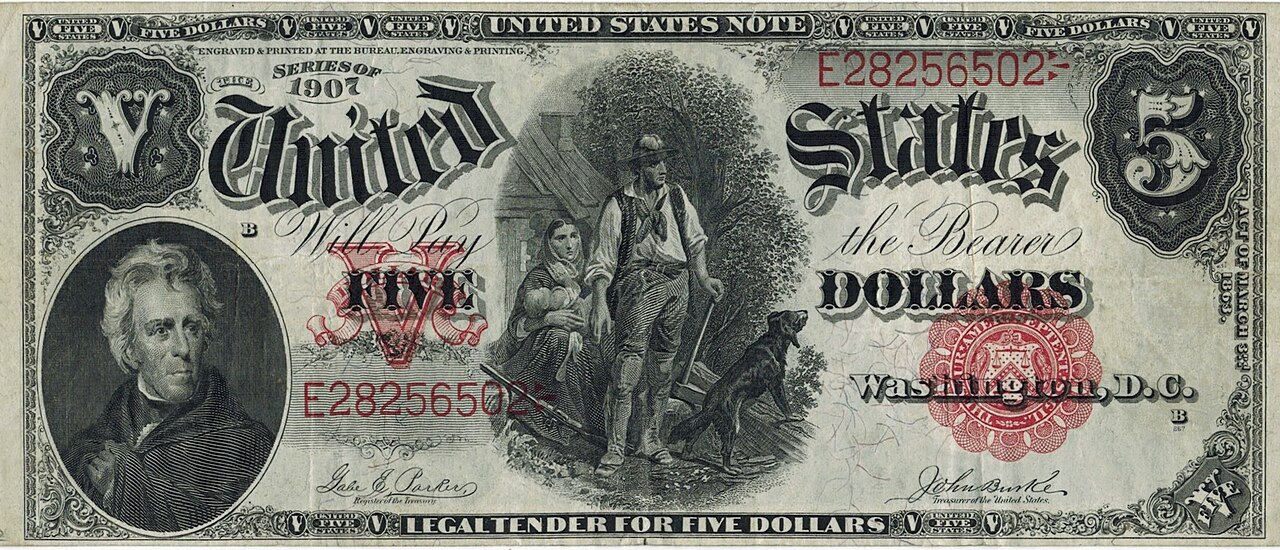
The “Grand Watermelon” — named for the watermelon-pattern zeros on the reverse — is the most famous American banknote. Issued in 1890 in the $1,000 denomination, fewer than ten examples are known to survive. The most famous copy sold at auction in 2014 for over $3.29 million, setting a record for any banknote sale.
2. 1882 Schweizerische Eidgenossenschaft 100 Franken
Early Swiss confederation banknotes from the 1880s are scarce in any condition. The 100 Franken denomination, with its detailed engraving and small surviving population, commands six-figure prices in high grade.
3. 1934 United States $100,000 Gold Certificate
Issued for inter-bank settlement and never circulated to the public, the 1934 $100,000 gold certificate was technically not a public banknote but is the highest denomination ever produced by the United States Treasury. The notes were destroyed when their inter-bank role ended; surviving examples sit in institutional collections and museum holdings rather than the open market.
4. 1860s Confederate States Currency, Specific Issues
The Confederate States issued a substantial volume of paper currency during the American Civil War, much of which became worthless after the war ended. Certain rare issues — particularly early-war notes from short-lived state issues, low-numbered serials, and notes with documented historical provenance — command four- and five-figure prices in high grade.
5. 1915 Russian Imperial 500 Ruble Note
The Imperial 500 Ruble note from the late Tsarist era featured an iconic portrait of Peter the Great. The combination of Russian-revolution scarcity (most circulated copies were destroyed during currency replacement) and the note’s striking design produces meaningful collector demand. High-grade surviving examples command low five figures.
6. 1920s German Notgeld (Emergency Money)
During the Weimar inflation crisis, German municipalities issued local emergency currency in vast quantities and creative designs. While most Notgeld notes are inexpensive, certain rare municipal issues with limited print runs command meaningful prices. The category as a whole is one of the richest historical-context collecting areas in notaphily.
7. 1928 United States Star Note Series
The 1928 series of small-size United States notes was the first to use the smaller dimensions familiar today. Star notes — replacement notes marked with a star symbol in the serial number — from this series in high grade are scarce. Specific denominations and Federal Reserve districts command four-figure premiums.
8. Australian 1923 King George V £1000 Note
The early Commonwealth Bank of Australia issues from the 1920s included high-denomination notes that saw very limited circulation. Surviving examples are scarce; authenticated high-grade copies command six-figure auction prices.
9. 1935 Bank of England £1000 Note
The Bank of England produced high-denomination notes — £500, £1000 — that circulated almost exclusively for inter-bank settlement. Surviving examples in collector condition are rare. The 1935 £1000 represents a high-water mark of British twentieth-century note design and commands premium auction prices.
10. 1976 Hong Kong $1,000 HSBC Note (First Issue)
The first issue of the modern HSBC $1,000 note from 1976 features a unique lion-design reverse and represents the start of the modern Hong Kong banking era. First-issue early-serial examples in high grade have appreciated significantly within the Asian collector market.
Authentication and Buying
Banknote authentication for high-value notes is essential. PMG and PCGS Banknote both grade and authenticate. Buy from specialist currency auction houses or established dealers with track records in the category. See our introduction to collecting banknotes for foundational guidance and our banknotes hub for the broader category.