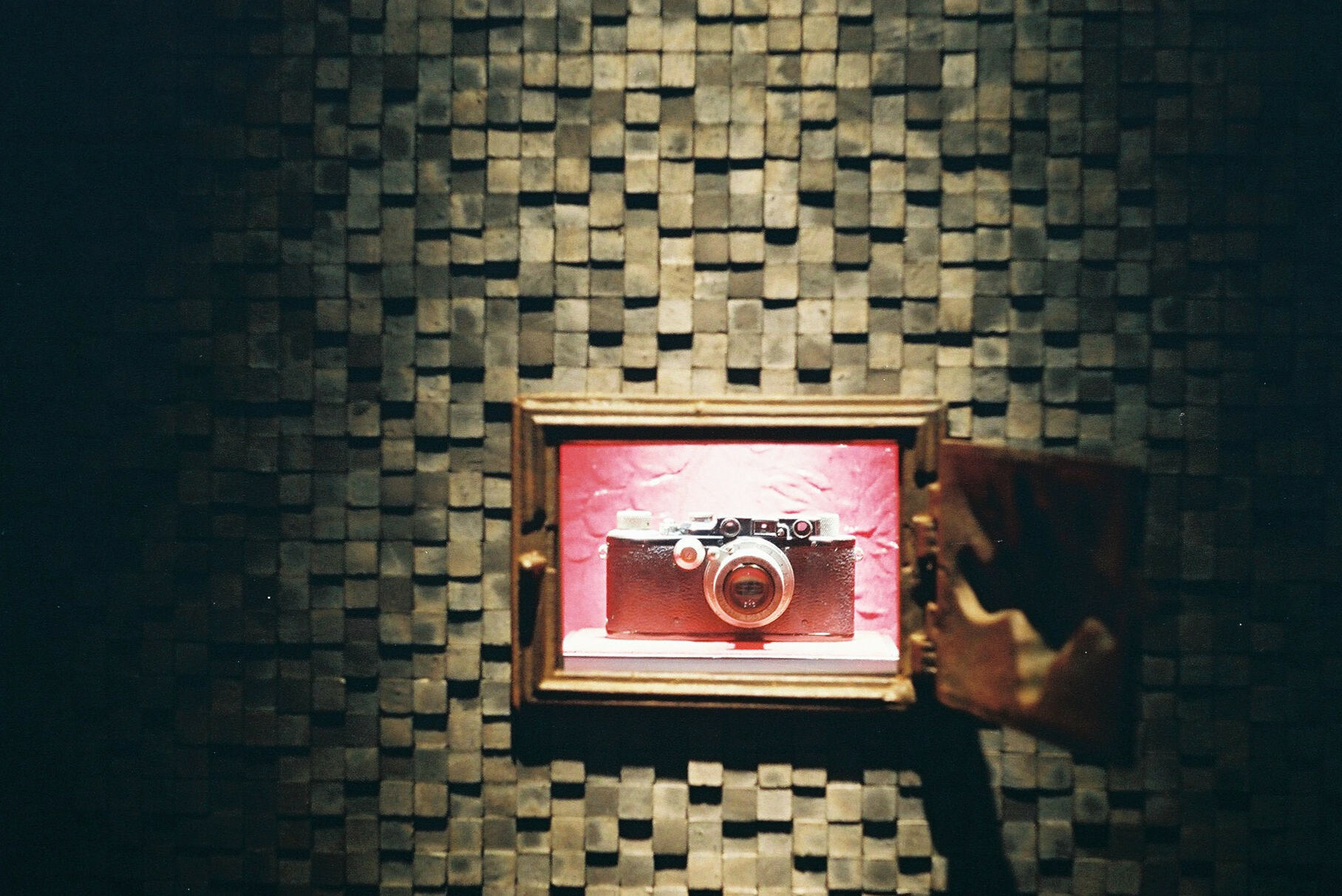
The Leica 0-Series (Null-Serie) is the camera that started 35mm photography. Only 25 pre-production cameras were built by Ernst Leitz Wetzlar in 1923 — two years before the production Leica I went on sale — and roughly a dozen survive today. Camera #105, used personally by inventor Oskar Barnack, sold at Leitz Photographica Auction in June 2022 for €14.4 million ($15 million), making it the most expensive camera ever sold.
Why the 0-Series matters
Before the Leica, “serious” photography meant heavy plate cameras and tripods. Oskar Barnack, an asthmatic engineer who could not carry a large camera into the mountains he loved, invented a tiny camera that used 35mm motion-picture film. The 0-Series was his proof-of-concept production run, distributed to Leitz executives, family and selected photographers for real-world testing. Their feedback shaped every Leica that followed, and through them every 35mm camera ever made — Nikon, Canon, Olympus, Pentax, even today’s mirrorless cameras all trace their lineage to these 25 prototypes.
How to identify an original 0-Series
Genuine 0-Series cameras carry serial numbers between 100 and 130 (with some gaps), engraved on the top plate. They lack the iconic red Leica dot (which only appeared decades later) and the model name. Distinguishing features include a rotating shutter speed dial unique to the prototype run, an early non-coupled rangefinder, and a Leitz Anastigmat 50mm f/3.5 lens (the predecessor to the famous Elmar). Fewer than 12 are known to be in private hands, and each is documented in the Leica historical archive in Wetzlar — any sale should reference the official Leica registry entry.
Market and value
Prices have climbed steadily for 30 years. A 0-Series sold for $336,000 in 2003, $2.16 million in 2012, $2.95 million in 2018, and €14.4 million in 2022. Each appearance at auction sets a new record for the camera category. Provenance is everything — Barnack’s personal #105 commands a multiple of any other example. Ordinary 0-Series cameras, when they appear, generally trade in the $2–4 million range.
Where to see one
The Leitz Park Museum in Wetzlar, Germany permanently displays multiple 0-Series cameras alongside the original prototypes Barnack built. The WestLicht Photo Museum in Vienna and the Eastman Museum in Rochester, New York have also exhibited examples. Leitz Photographica Auction holds public previews twice a year in Vienna.
For families and younger photographers
You don’t need millions to share Leica’s story. The Leica brand still produces analogue rangefinders (the M-A and MP) using essentially the same principles Barnack invented. Affordable Soviet-era Zorki and FED cameras — direct copies of pre-war Leicas — start at $50–$150 and are wonderful first 35mm cameras for teenagers. Visiting a working darkroom or community photo lab pairs perfectly with the history lesson.
Care and storage
Vintage cameras need exercise. Store in a stable, dry environment (40–50% RH) and fire the shutter through every speed once a month to keep lubrication moving. Avoid silica-gel desiccants strong enough to dry out leather coverings. Have a professional Leica technician — Leitz’s Wetzlar service department or specialists like DAG or Sherry Krauter — perform a condition assessment every five years.
Read next
Compare with the Nikon S3, Hasselblad 1600F and Rollei 35 to understand how Barnack’s idea evolved across three continents.
About This collectible
The Leica 0-Series No. 105 (1923 Prototype Camera) is a notable entry in the collectible category. Whether you are a seasoned collector or evaluating your first piece, understanding provenance, condition, and market context is essential for confident decisions. This guide summarizes what makes this item collectible and how to evaluate examples in the market.
Identification & Authentication
Authenticating a Leica 0-Series No. 105 (1923 Prototype Camera) requires attention to period-correct materials, manufacturing marks, signatures, and chain of custody documentation. Where third-party authentication exists (PSA, JSA, Beckett, SGC, PCGS, NGC, or category-specific authenticators), graded examples carry significant premium over raw pieces. Consult a recognized authenticator before high-value purchases.
Valuation & Market Pricing
Values for the Leica 0-Series No. 105 (1923 Prototype Camera) vary by condition, provenance, completeness, and demand. Track recent sold prices on major venues including Heritage Auctions, Goldin, Christie’s, Sotheby’s, and eBay completed listings to benchmark fair market value. Realized sales reflect true value; asking prices do not.
Condition & Grading
Condition is the largest variable affecting value. Use the grading scale appropriate to the category and document defects honestly. For graded items, verify certification numbers on the grader’s website. For raw items, photograph all surfaces under neutral lighting and disclose any restoration or imperfections.
Where to Buy & Sell
Reputable venues include major auction houses, established dealer networks, specialty shows, and vetted online marketplaces. Avoid private cash transactions with unknown parties for high-value pieces. Use buyer protection or escrow when transacting at scale.
Frequently Asked Questions
How do I know if my Leica 0-Series No. 105 (1923 Prototype Camera) is authentic?
Authenticity is best confirmed by a recognized third-party authenticator. Visual inspection alone is rarely sufficient for high-value pieces.
What is a Leica 0-Series No. 105 (1923 Prototype Camera) worth?
Value depends on condition, provenance, and completeness. Check recent sold prices on major auction venues for comparable examples.
Where should I sell my Leica 0-Series No. 105 (1923 Prototype Camera)?
For high-value pieces, established auction houses with category expertise typically deliver the best results. For mid-market items, vetted online marketplaces or dealer networks balance reach and fees.
Does grading add value?
For most categories, third-party grading adds meaningful value to top-condition examples. For lower-grade pieces, the grading fee can exceed the value uplift.
🔎 Buying or Selling This Item?
Affiliate links will appear here once configured in Settings → General.