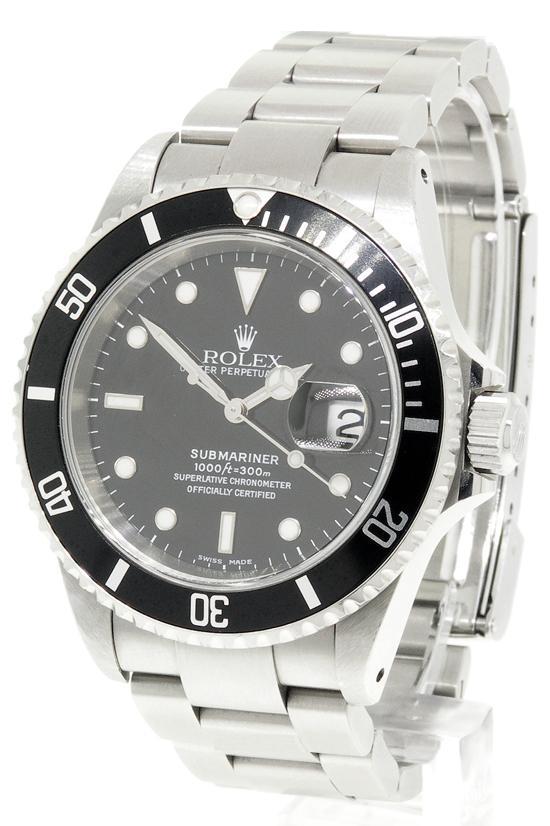
Counterfeit and “franken” (parts-mixed) Rolex Submariners are among the most prevalent watch forgeries. This guide outlines the inspection points used by experienced collectors and authenticators.
1. Movement Inspection
Movement examination is the single most decisive authentication step. Authentic Rolex Submariner calibers (15xx, 30xx, 31xx, 32xx series, depending on era) are exceptionally well-finished, with Côtes de Genève striping on the bridges, blued or tempered screws, and a Rolex-signed automatic rotor. Counterfeit movements — even high-quality “super clones” — almost always have visible finishing differences. A reputable independent watchmaker can open the case-back and confirm the movement is correct for the reference and serial number.
2. Case-Back & Reference Number
Modern Rolex case-backs are smooth and unsigned (with rare exceptions). Vintage references have specific case-back interior stampings, including reference numbers and date codes (e.g., II.66 for second quarter 1966). The exterior should be smooth — engraved or fancy case-backs are not authentic Rolex. Reference numbers between the lugs (visible by removing the bracelet) must match the dial designation.
3. Dial Typography
Each Submariner reference has specific period-correct dial typography. Examine:
- Coronet logo at 12 o’clock — proportions, position, and lume aging
- “Submariner” and depth-rating text — font weight and kerning
- “Swiss Made” or “Swiss-T<25" markings on the lower edge
- Lume plot positioning and aging consistency
Service-replacement dials are common on vintage Submariners. While not counterfeit per se, service dials significantly impact value relative to original-paint dials.
4. Bezel Insert & Bezel Action
Vintage bezel inserts develop characteristic fade patterns (“ghost,” “tropical,” etc.) that are highly prized and frequently faked. Examine the insert under angled light for paint consistency and pattern uniformity. The bezel itself should rotate counterclockwise only (unidirectional) with smooth, even resistance and 120 audible clicks per full rotation on modern references.
5. Crown & Crown Tube
The Triplock or Twinlock crown should screw down smoothly with no resistance jumps. The crown tube should be tight to the case with no wobble. Counterfeits frequently exhibit poor crown tolerances, visible threading wear, or incorrect crown logo proportions.
6. Bracelet & Clasp
Each Submariner reference shipped with specific bracelet references (Oyster 93150, 93250, 97200, etc., depending on era). The reference is stamped between the end-links. The clasp should display the appropriate Rolex logo, reference, and date code for the period. Aftermarket bracelets are common on vintage examples and substantially affect value.
7. Weight
Authentic Rolex sport watches feel substantial — modern Submariners weigh approximately 155 grams on a steel bracelet. Hollow-link counterfeits or aluminum-cased fakes feel notably lighter. While weight alone is not definitive, an unusually light Submariner is a serious red flag.
8. Provenance Documentation
Original box and papers (warranty card, hangtags, booklets) significantly support authenticity and value. The warranty card should match the case serial number and reference. Period-correct boxes have specific design details that can be cross-referenced.
9. The Cyclops & Date Wheel
For Submariner Date references (1680, 16800, 116610, 124060, etc.), the cyclops magnification on the date should be 2.5×. Counterfeits frequently use 1.5× or no magnification. The date wheel font must be period-correct for the reference.
10. Engage a Specialist
For any pre-purchase verification of a Submariner valued over a few thousand dollars, engage a qualified independent watchmaker for a movement inspection or purchase from a Rolex Authorized Dealer or recognized auction house (Phillips, Christie’s, Sotheby’s, Antiquorum) with a published authenticity guarantee.
See Also
This guide is educational. Vintage Rolex authentication is highly specialized — engage a recognized expert for any high-value transaction.
Frequently Asked Questions
How can I tell if a Rolex Submariner is real?
Examine: cyclops magnification (genuine 2.5x, fakes often 1.5x), second hand sweep (smooth in real, ticking in fakes), case back (genuine Submariners have plain case backs, no engravings except limited Sea-Dwellers), serial/reference numbers (between lugs on vintage, on rehaut on modern), and weight (real ~155g for steel). Professional authentication recommended for purchases over $5,000.
Are super clones really undetectable?
Modern “super clones” (with genuine Swiss movements, accurate dial printing, and proper case dimensions) can fool casual inspection but fail expert examination on details: hairspring composition, screw threading, gasket compounds, crystal cut precision, and movement finishing. Authorized Rolex dealers can identify all super clones via internal databases.
What’s the best way to verify a vintage Rolex?
Have an authorized Rolex dealer or independent specialist (e.g., Bob’s Watches, Crown & Caliber, RolexForums vetted experts) examine the watch in person. Check service history paperwork, original box and papers, dial signatures, hand sets, and movement reference numbers. Provenance from a known collector adds significant value.
Should I buy a Rolex from eBay?
Only with strict precautions: use eBay’s authenticity guarantee program (free for watches over $2,000), verify seller history, request additional photos including movement and serial, and budget for independent authentication ($150-$400) post-purchase. Avoid sellers without 100+ feedback or watches priced significantly below market.
What are red flags in a Rolex listing?
No box/papers without explanation, generic stock photos only, prices 30%+ below market, refusal to provide additional photos, “private sale” requests outside platform, vague provenance, and recently created seller accounts. Trust your instincts—if a deal seems too good to be true on a $10,000+ watch, it almost always is.