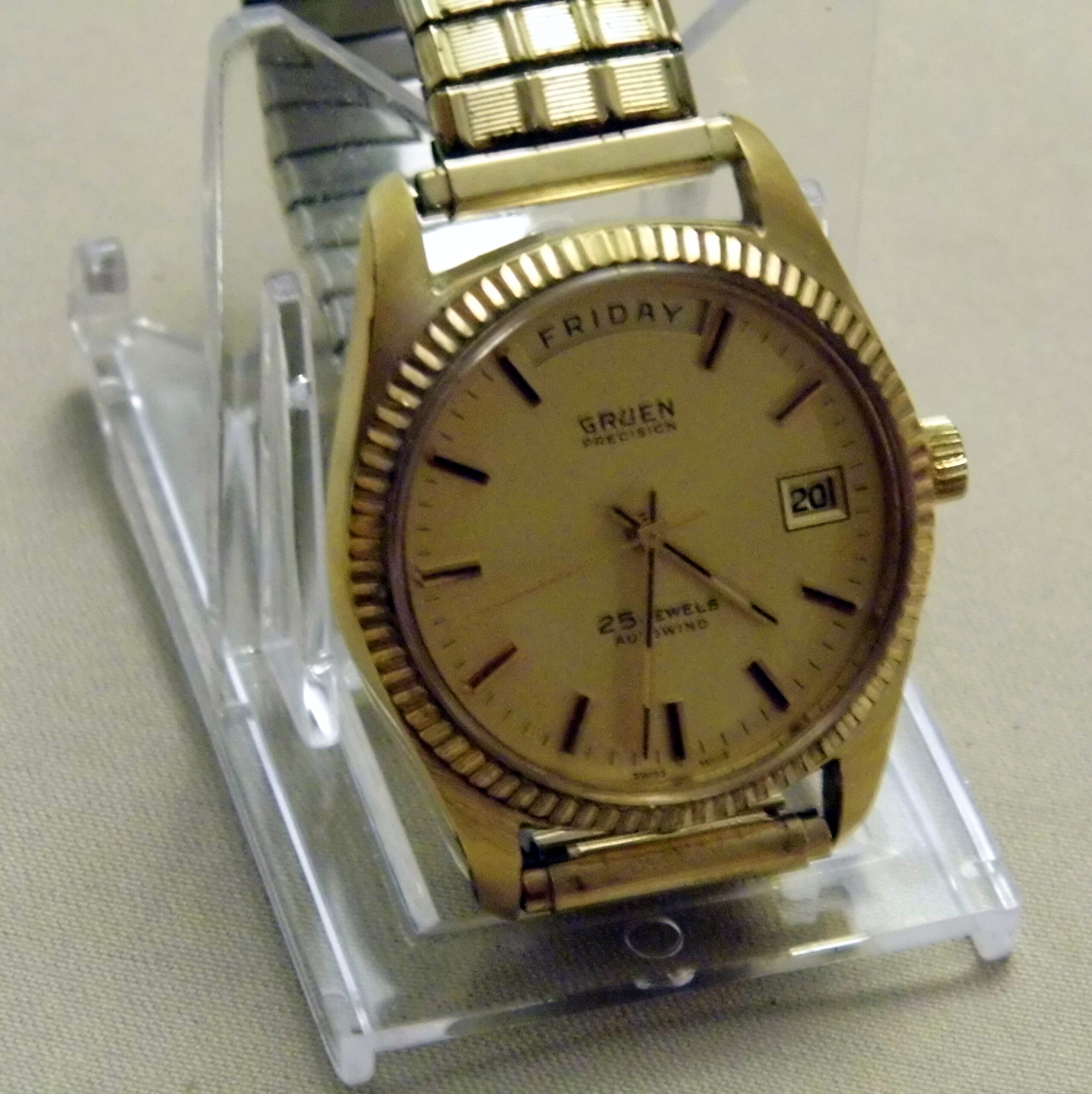
Vintage watch acquisition is one of the most rewarding — and perilous — corners of the collecting world. This pre-purchase checklist covers the verification points that separate informed buyers from costly mistakes.
1. Define Your Reference
Before evaluating any specific example, research the reference exhaustively. For each candidate reference, you should know:
- Production years and serial-number ranges
- Movement caliber(s) used in production
- Dial and hand variants by year
- Case-back details and inner stampings
- Period-correct bracelets and clasps
- Common issues, modifications, and “frankenwatch” combinations
Reference resources include Phillips Bacs & Russo essays, watch-specific reference books, and dedicated forums (Vintage Rolex Forum, Omega Forums, Hodinkee TalkingWatches).
2. Case Inspection
Examine the case under raking light. Look for:
- Original chamfered lug bevels (lost on heavily polished cases)
- Sharpness of case lines and hallmarks
- Crown guard geometry (if applicable)
- Reference number between the lugs (visible with bracelet removed)
- Serial number between the lugs and inner case-back
Polishing reduces value substantially. A heavily polished case has lost its original geometry and cannot be restored.
3. Dial Examination
Dial originality is the single largest value driver for vintage watches. Examine:
- Lume plot consistency (color, height, aging pattern)
- Print quality and font weight against verified period references
- “Tropical” patina (browning of black dials) — desirable but extensively faked
- Service dial markers (often have “T Swiss Made T” misalignment or wrong fonts)
- Restoration evidence — touched-up text, repainted markers, or corrected lume
4. Movement Verification
For any watch over a few thousand dollars, request the case be opened by a qualified watchmaker for movement inspection. Verify:
- Caliber matches the period and reference
- Movement serial number aligns with case serial
- Finishing is appropriate for the maker (Geneva striping, perlage, blued screws, etc.)
- No obvious replacement parts (modern hairsprings, replacement balance wheels)
5. Hands & Crown
Original hands are reference-specific and frequently replaced during service. Verify hand style and length against period reference photos. Crown logos and sizing should match the period — counterfeit crowns often have subtly wrong logo proportions.
6. Bracelet & Clasp
Bracelets are reference-specific. Verify that the bracelet reference number and end-link codes match the watch’s period. Clasps should display appropriate logos and date codes.
7. Papers, Box & Provenance
Original “full set” — box, papers, hangtags, booklets, and original receipt — substantially supports value. Verify that paper documentation matches the watch’s serial and reference. Reproduction paperwork is increasingly common.
8. Price Comparison
Before transacting, build a comp set of at least 5 recent comparable sales from major auction houses (Phillips, Christie’s, Sotheby’s, Antiquorum, Bonhams) and reputable dealers (Hodinkee Shop, Eric Wind Vintage Watches, Ben Clymer’s circle, Watches of Knightsbridge). Single private-sale prices are unreliable — focus on documented public auction results.
9. Engage a Specialist
For any watch valued over a meaningful threshold for your budget, engage an independent vintage watchmaker or recognized authenticator for a pre-purchase inspection. Their fee is small relative to the protection they provide.
10. Buyer Protection
Major auction houses (Phillips, Christie’s, Sotheby’s, Antiquorum) provide authenticity guarantees on their lots. Reputable specialist dealers offer return policies. Private sales without these protections require corresponding price discounts and rigorous independent verification.
Red Flags That Should End Negotiation
- Seller refuses movement inspection by a qualified watchmaker
- Below-market pricing without clear explanation
- Inconsistent serial number ranges or reference details
- Mismatched movement, dial, hands, and case from different periods
- Pressure to transact quickly without standard due diligence
See Also
This checklist is educational. Vintage watch authentication is highly specialized — engage a recognized specialist for any high-value transaction.
Frequently Asked Questions
What should I check first when buying a vintage watch?
In order: (1) Authenticate against the reference (model, dial, hands, movement)—not just brand. (2) Service history with documentation. (3) Condition of dial and case (original vs. relume/refinished). (4) Movement integrity and amplitude. (5) Provenance and seller reputation. Skip any of these and you risk losing 30-80% of value.
Is service history really that important?
Yes—a vintage watch without service history may need $500-$3,000 in immediate work. Watches with documented service records from authorized centers or known specialists trade at 15-30% premiums. Always request the most recent service receipt before purchase.
How do I tell if a vintage watch dial is original?
Examine: tritium aging patterns (should be consistent across all hour markers), patina uniformity (refinished dials show too-clean print), font and printing register (originals show period-specific imperfections), and luminous compound color (tritium ages cream/yellow; reluminated dials show modern white or green super-luminova).
What documents should accompany a vintage watch purchase?
Original box and warranty papers (often called “Full Set”—commands 20-50% premium), original purchase receipt or warranty card, service receipts from recognized centers, and a written authenticity statement from the seller specifying serial/reference numbers. Insurance appraisal is helpful but optional.
Should I buy from auction houses or dealers?
Auctions (Phillips, Christie’s, Sotheby’s, Antiquorum) for rare/grail pieces—competitive pricing but buyer’s premium adds 25-30%. Specialist dealers (Watch Vault, Hodinkee Shop, Analog/Shift) for premium-priced but vetted pieces. Avoid eBay/Chrono24 without enhanced authentication for purchases over $5,000.