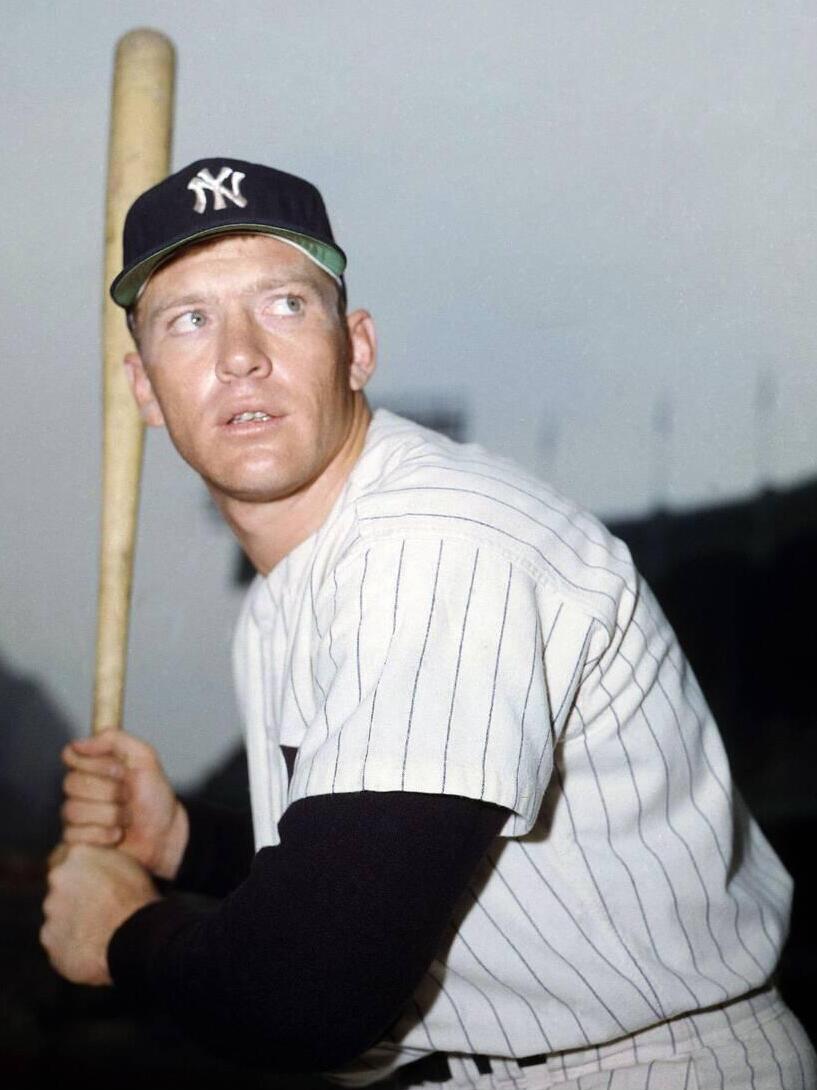
The 1952 Topps Mickey Mantle is the post-war “Holy Grail” of baseball card collecting and one of the most discussed trading cards in any category.
Quick Facts
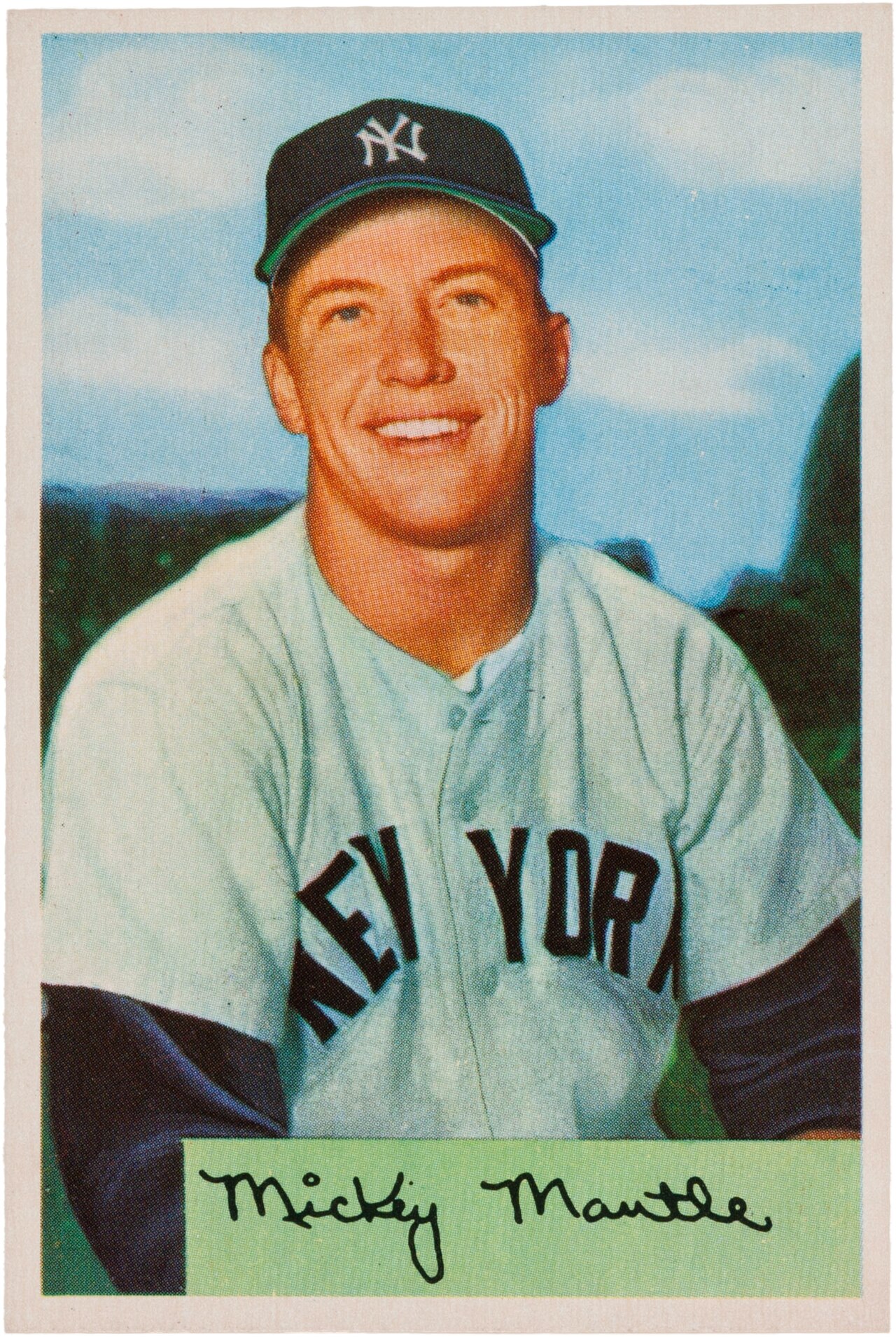
- Set: 1952 Topps Baseball
- Card Number: #311
- Player: Mickey Mantle, New York Yankees
- Series: High number series (third / final 1952 series)
- Significance: Mantle’s first Topps card (his rookie card is the 1951 Bowman #253)
Why It Matters
While 1951 Bowman #253 is technically Mantle’s rookie card, the 1952 Topps #311 is more widely regarded as the defining Mantle issue and the centerpiece of post-war baseball card collecting. The card sits at the front of the high-number series — a series infamously dumped into the Atlantic Ocean by Topps when 1952 inventory went unsold. The resulting scarcity, combined with Mantle’s status as one of the greatest hitters in baseball history, has made #311 the most valuable post-war trading card.
Identification & Authentication
Authentic 1952 Topps Mantles measure approximately 2 5/8″ × 3 3/4″ — slightly larger than modern cards. The reverse should display the distinctive 1952 Topps red-and-black layout with full statistical breakdown. Authentication is essential: counterfeits and reprints have circulated for decades, including period reprints from the 1980s. Always purchase examples certified by PSA, SGC, or Beckett. Raw cards command a steep authenticity discount.
Grading & Census
The card is heavily submitted to PSA and SGC. Centering is the most common grade-cap factor — 1952 Topps high numbers were printed with notoriously inconsistent registration. PSA 9 and SGC 9 examples are census rarities; PSA 10s number in single digits. Consult the latest PSA and SGC population reports for current data.
Counterfeit Red Flags
- Cards with overly bright, modern-looking color saturation — authentic 1952s have a soft, slightly muted printing.
- Card stock that feels too smooth or glossy; period stock is matte and slightly fibrous.
- Reverse statistics that misalign or use modern font kerning.
- Diamond-cut corners or rough edges that don’t match Topps’ period die-cut technique.
Market Context
This card has set repeated public auction records. Multiple eight-figure private and public sales have been reported in recent years. Useful auction reference points include Heritage Auctions, Robert Edward Auctions (REA), Goldin, and Memory Lane.
Storage
Raw examples — if confirmed authentic — should be archived in mylar with archival board, in stable temperature and humidity. Graded slabs should be stored upright with silica desiccant and protected from UV exposure.
See Also
Always verify authenticity, population reports, and current market comparables through PSA, SGC, Beckett, or a reputable auction house before transacting.
About This collectible
The 1952 Topps Mickey Mantle (#311) is a notable entry in the collectible category. Whether you are a seasoned collector or evaluating your first piece, understanding provenance, condition, and market context is essential for confident decisions. This guide summarizes what makes this item collectible and how to evaluate examples in the market.
Identification & Authentication
Authenticating a 1952 Topps Mickey Mantle (#311) requires attention to period-correct materials, manufacturing marks, signatures, and chain of custody documentation. Where third-party authentication exists (PSA, JSA, Beckett, SGC, PCGS, NGC, or category-specific authenticators), graded examples carry significant premium over raw pieces. Consult a recognized authenticator before high-value purchases.
Valuation & Market Pricing
Values for the 1952 Topps Mickey Mantle (#311) vary by condition, provenance, completeness, and demand. Track recent sold prices on major venues including Heritage Auctions, Goldin, Christie’s, Sotheby’s, and eBay completed listings to benchmark fair market value. Realized sales reflect true value; asking prices do not.
Condition & Grading
Condition is the largest variable affecting value. Use the grading scale appropriate to the category and document defects honestly. For graded items, verify certification numbers on the grader’s website. For raw items, photograph all surfaces under neutral lighting and disclose any restoration or imperfections.
Where to Buy & Sell
Reputable venues include major auction houses, established dealer networks, specialty shows, and vetted online marketplaces. Avoid private cash transactions with unknown parties for high-value pieces. Use buyer protection or escrow when transacting at scale.
Frequently Asked Questions
How do I know if my 1952 Topps Mickey Mantle (#311) is authentic?
Authenticity is best confirmed by a recognized third-party authenticator. Visual inspection alone is rarely sufficient for high-value pieces.
What is a 1952 Topps Mickey Mantle (#311) worth?
Value depends on condition, provenance, and completeness. Check recent sold prices on major auction venues for comparable examples.
Where should I sell my 1952 Topps Mickey Mantle (#311)?
For high-value pieces, established auction houses with category expertise typically deliver the best results. For mid-market items, vetted online marketplaces or dealer networks balance reach and fees.
Does grading add value?
For most categories, third-party grading adds meaningful value to top-condition examples. For lower-grade pieces, the grading fee can exceed the value uplift.
🔎 Buying or Selling This Item?
Affiliate links will appear here once configured in Settings → General.