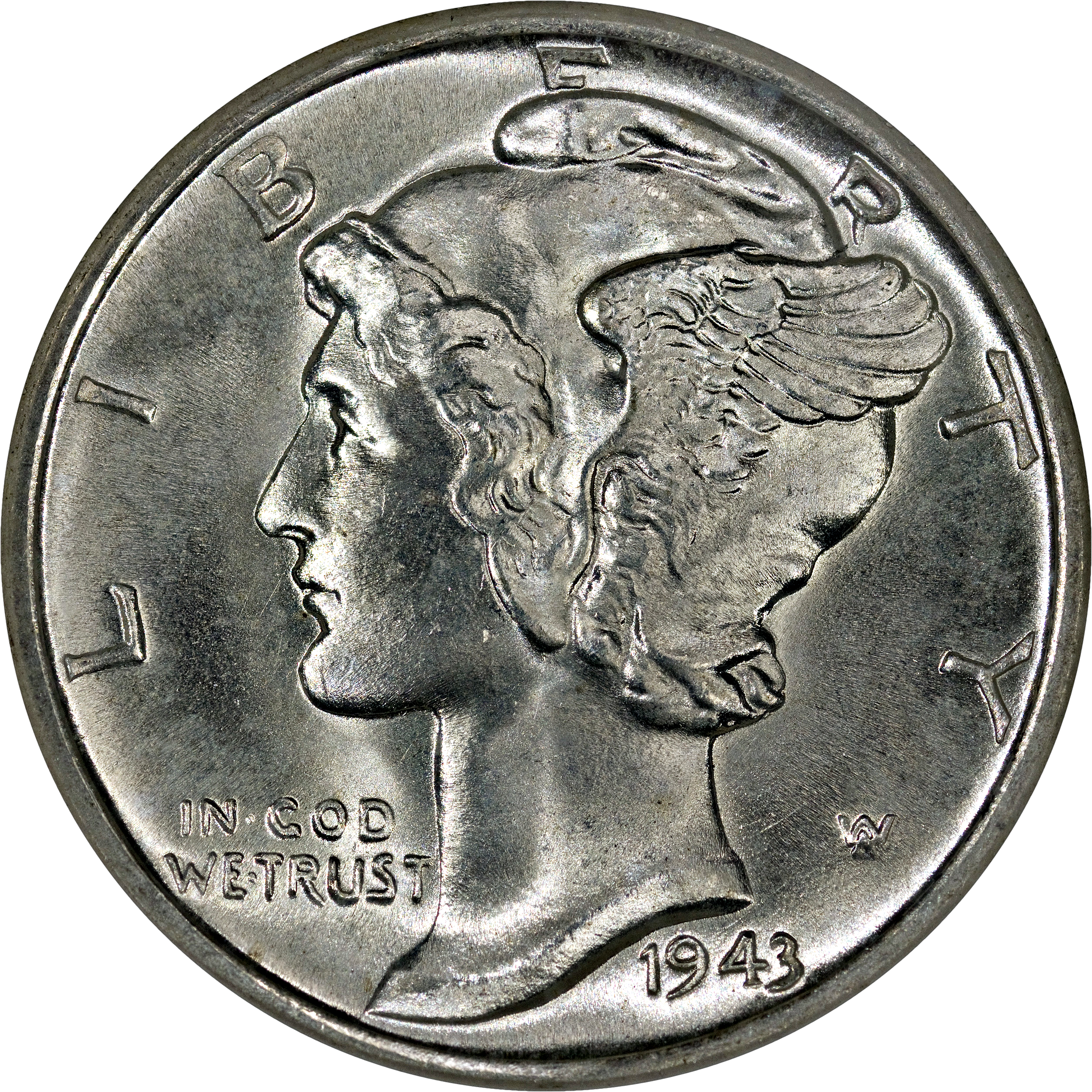
The famous first-year low-mintage Denver Mint Mercury dime, with just 264,000 produced.
Quick Facts
- Series: Mercury Dime (Winged Liberty Head)
- Year & Mint: 1916, Denver Mint (D mintmark)
- Mintage: 264,000 business strikes
- Composition: 90% silver / 10% copper
- Weight: 2.5 grams
- Diameter: 17.9 mm
- Designer: Adolph A. Weinman
Significance
The 1916-D is the key date of the Mercury dime series (1916–1945) and one of the most counterfeited U.S. type coins. Denver produced just 264,000 dimes in 1916 — by far the lowest mintage of the series — and the coin saw heavy circulation through the 1920s and 1930s, leaving few high-grade survivors.
Identification & Authentication
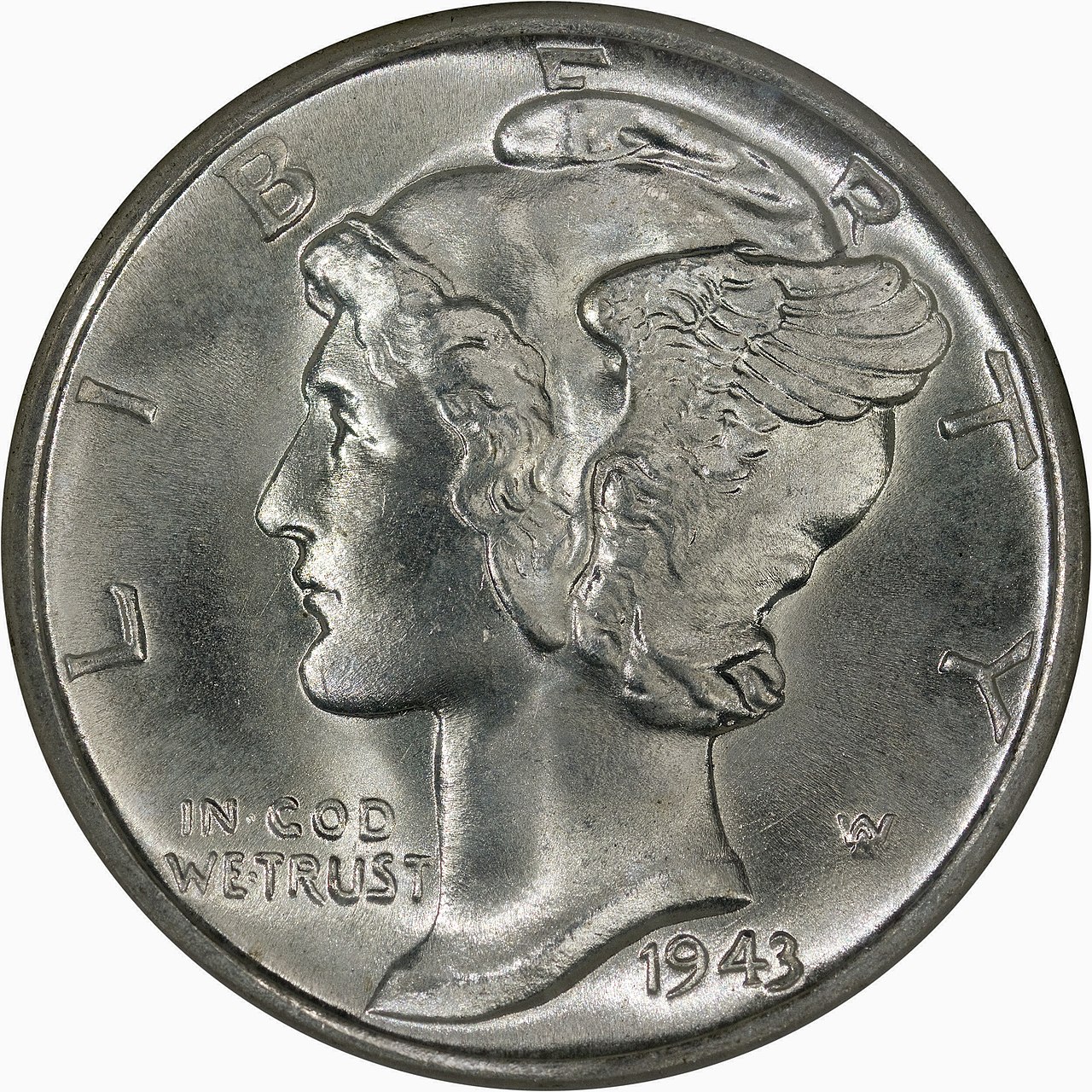
The 1916-D features Liberty wearing a winged Phrygian cap on the obverse, with the date below and “D” mintmark on the reverse to the left of the fasces. Counterfeits are common: the most prevalent is the altered-mintmark variety, in which a 1916 Philadelphia coin has a “D” added. Examine the mintmark under high magnification for tooling marks and compare letter shape to verified 1916-D references. Always purchase certified examples from PCGS, NGC, or ANACS.
Full Bands Designation
“Full Bands” (FB) is a designation given to Mercury dimes that show fully separated horizontal bands across the central fasces on the reverse. Full Bands examples of the 1916-D command substantial premiums over standard examples within the same numerical grade.
Counterfeit Red Flags
- Added mintmarks (the most common forgery method).
- Coins with weak rim detail or evidence of tooling around the date or mintmark.
- Incorrect weight or specific gravity.
- Wrong die characteristics — verified 1916-D dies have specific identifiable details.
Market
The 1916-D commands strong prices across all grades. Even circulated G–VG examples trade in the four-figure range. Mint State and Full Bands examples are major prizes. Reference Heritage Auctions and Stack’s Bowers archives for current comparables.
Storage
Certified slabs should be stored in archival-quality holders with desiccant. Maintain stable temperature and humidity below 50% RH.
See Also
Always buy certified examples and verify authenticity with PCGS or NGC. Counterfeit and altered-mintmark examples are widespread.
About This collectible
The 1916-D Mercury Dime is a notable entry in the collectible category. Whether you are a seasoned collector or evaluating your first piece, understanding provenance, condition, and market context is essential for confident decisions. This guide summarizes what makes this item collectible and how to evaluate examples in the market.
Identification & Authentication
Authenticating a 1916-D Mercury Dime requires attention to period-correct materials, manufacturing marks, signatures, and chain of custody documentation. Where third-party authentication exists (PSA, JSA, Beckett, SGC, PCGS, NGC, or category-specific authenticators), graded examples carry significant premium over raw pieces. Consult a recognized authenticator before high-value purchases.
Valuation & Market Pricing
Values for the 1916-D Mercury Dime vary by condition, provenance, completeness, and demand. Track recent sold prices on major venues including Heritage Auctions, Goldin, Christie’s, Sotheby’s, and eBay completed listings to benchmark fair market value. Realized sales reflect true value; asking prices do not.
Condition & Grading
Condition is the largest variable affecting value. Use the grading scale appropriate to the category and document defects honestly. For graded items, verify certification numbers on the grader’s website. For raw items, photograph all surfaces under neutral lighting and disclose any restoration or imperfections.
Where to Buy & Sell
Reputable venues include major auction houses, established dealer networks, specialty shows, and vetted online marketplaces. Avoid private cash transactions with unknown parties for high-value pieces. Use buyer protection or escrow when transacting at scale.
Frequently Asked Questions
How do I know if my 1916-D Mercury Dime is authentic?
Authenticity is best confirmed by a recognized third-party authenticator. Visual inspection alone is rarely sufficient for high-value pieces.
What is a 1916-D Mercury Dime worth?
Value depends on condition, provenance, and completeness. Check recent sold prices on major auction venues for comparable examples.
Where should I sell my 1916-D Mercury Dime?
For high-value pieces, established auction houses with category expertise typically deliver the best results. For mid-market items, vetted online marketplaces or dealer networks balance reach and fees.
Does grading add value?
For most categories, third-party grading adds meaningful value to top-condition examples. For lower-grade pieces, the grading fee can exceed the value uplift.
🔎 Buying or Selling This Item?
Affiliate links will appear here once configured in Settings → General.