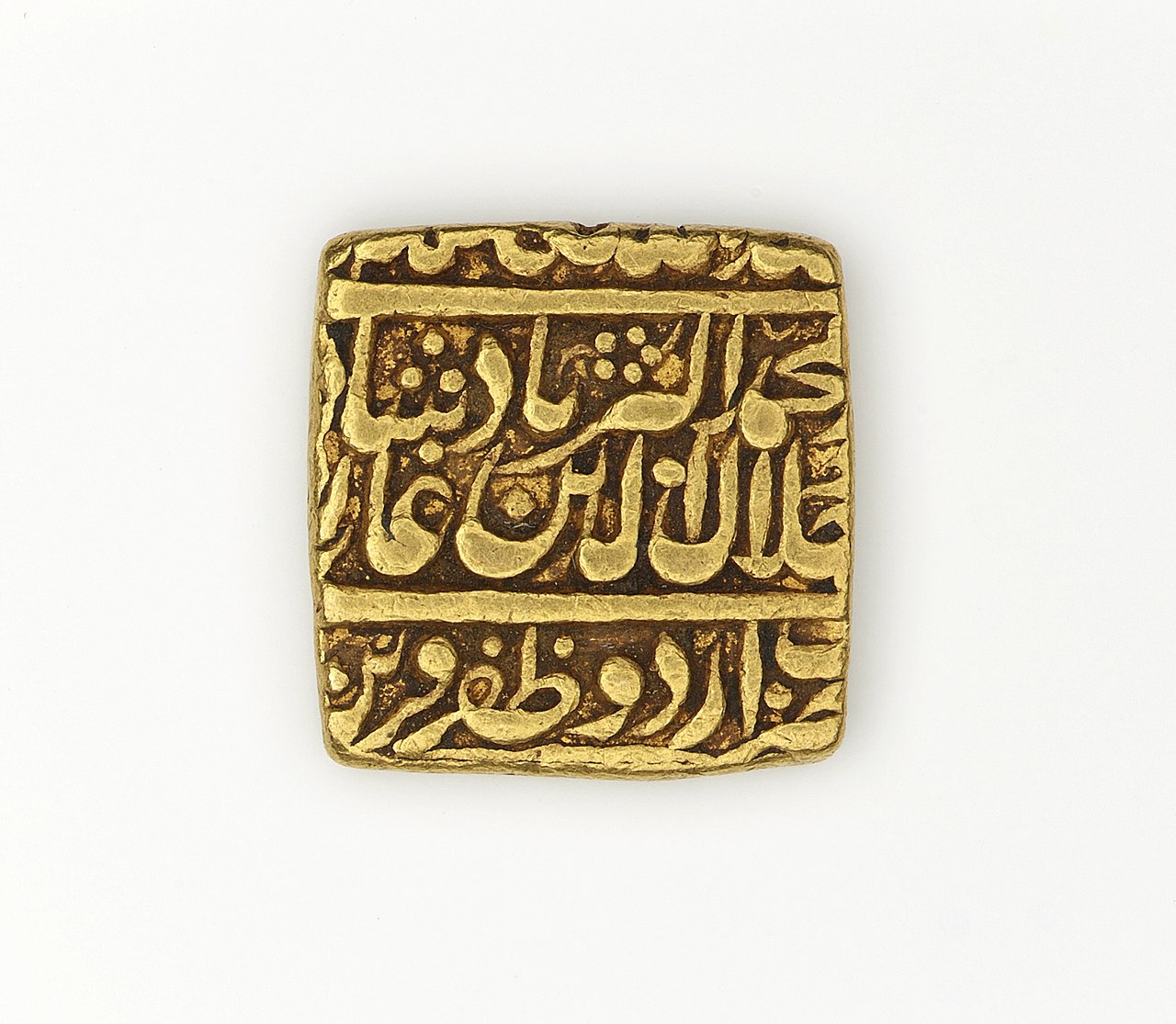
Mughal gold coinage represents some of the finest Islamic numismatic art ever produced. The mohur of Akbar — the third Mughal emperor — is an iconic Indian-subcontinent collectible and a globally recognised type.
What it is
The mohur was the principal Mughal gold coin, weighing approximately 11 grams. Akbar’s mohurs are notable for their wide range of mints (Agra, Lahore, Delhi, Ahmedabad, Allahabad, Kabul, and many more), the introduction of the Ilahi calendar (Akbar’s solar religious calendar) on later issues, and the artistic experimentation of Akbar’s court — including the famously-controversial figural mohurs depicting falcons and human figures, which broke with Islamic tradition.
What drives value
Mint, year, condition, the presence of the Ilahi-month name on the reverse, and the famous “Ram-Siya” mohurs depicting Hindu deities (extremely rare). Authentication is critical because the Mughal-coin market has seen sustained forgery activity for over a century. Classical Numismatic Group, Stephen Album, Morton & Eden, and the Indian house Marudhar Arts handle most high-end Mughal gold; the State Bank of India archive holds reference specimens.
About This collectible
The Indian Mughal Mohur of Akbar the Great (1556–1605) is a notable entry in the collectible category. Whether you are a seasoned collector or evaluating your first piece, understanding provenance, condition, and market context is essential for confident decisions. This guide summarizes what makes this item collectible and how to evaluate examples in the market.
Identification & Authentication
Authenticating a Indian Mughal Mohur of Akbar the Great (1556–1605) requires attention to period-correct materials, manufacturing marks, signatures, and chain of custody documentation. Where third-party authentication exists (PSA, JSA, Beckett, SGC, PCGS, NGC, or category-specific authenticators), graded examples carry significant premium over raw pieces. Consult a recognized authenticator before high-value purchases.
Valuation & Market Pricing
Values for the Indian Mughal Mohur of Akbar the Great (1556–1605) vary by condition, provenance, completeness, and demand. Track recent sold prices on major venues including Heritage Auctions, Goldin, Christie’s, Sotheby’s, and eBay completed listings to benchmark fair market value. Realized sales reflect true value; asking prices do not.
Condition & Grading
Condition is the largest variable affecting value. Use the grading scale appropriate to the category and document defects honestly. For graded items, verify certification numbers on the grader’s website. For raw items, photograph all surfaces under neutral lighting and disclose any restoration or imperfections.
Where to Buy & Sell
Reputable venues include major auction houses, established dealer networks, specialty shows, and vetted online marketplaces. Avoid private cash transactions with unknown parties for high-value pieces. Use buyer protection or escrow when transacting at scale.
Frequently Asked Questions
How do I know if my Indian Mughal Mohur of Akbar the Great (1556–1605) is authentic?
Authenticity is best confirmed by a recognized third-party authenticator. Visual inspection alone is rarely sufficient for high-value pieces.
What is a Indian Mughal Mohur of Akbar the Great (1556–1605) worth?
Value depends on condition, provenance, and completeness. Check recent sold prices on major auction venues for comparable examples.
Where should I sell my Indian Mughal Mohur of Akbar the Great (1556–1605)?
For high-value pieces, established auction houses with category expertise typically deliver the best results. For mid-market items, vetted online marketplaces or dealer networks balance reach and fees.
Does grading add value?
For most categories, third-party grading adds meaningful value to top-condition examples. For lower-grade pieces, the grading fee can exceed the value uplift.
🔎 Buying or Selling This Item?
Affiliate links will appear here once configured in Settings → General.