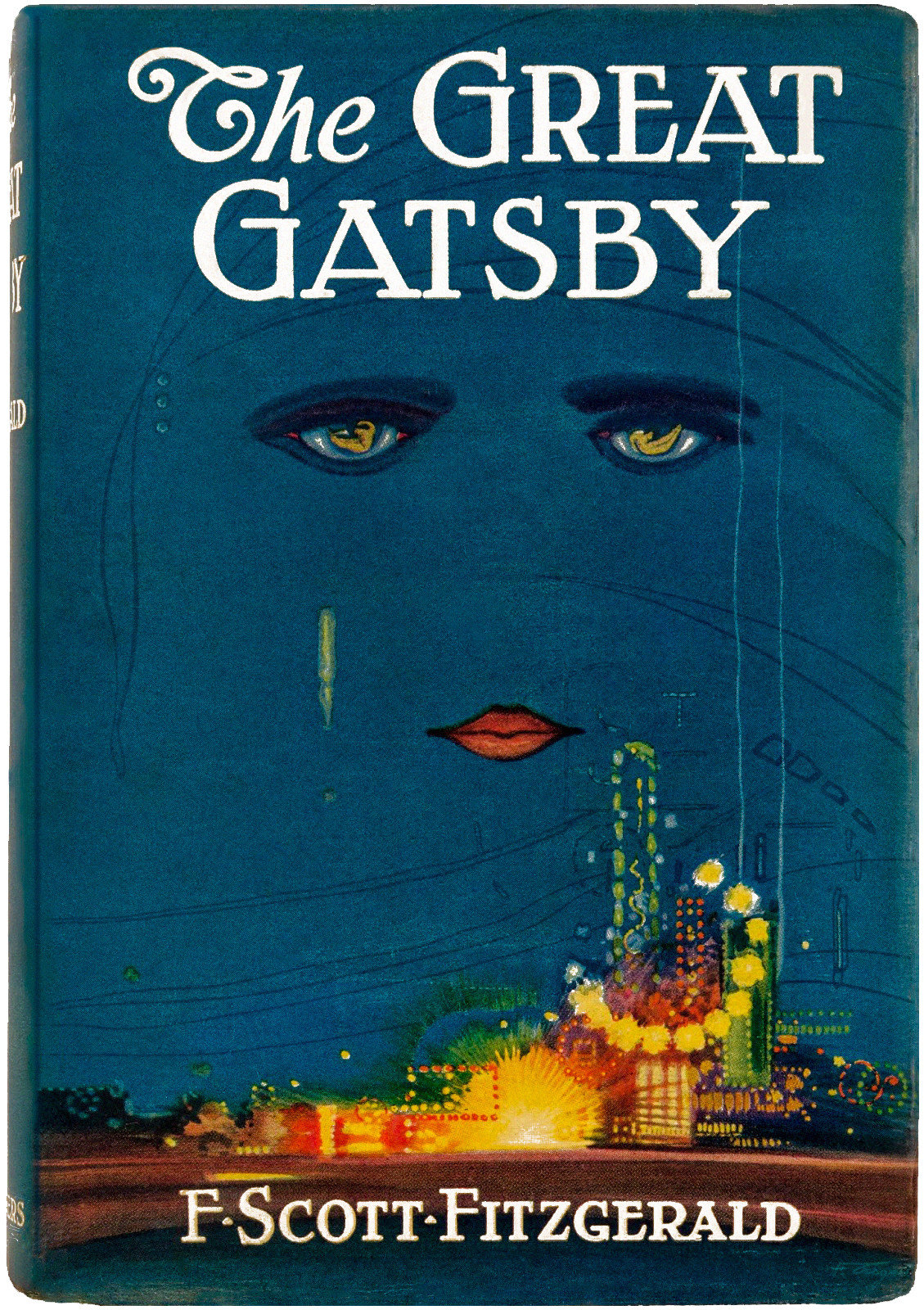
The Scribner first printing
F. Scott Fitzgerald’s The Great Gatsby was published by Charles Scribner’s Sons in April 1925. The first printing carries specific identifying points: the lowercase j in “jay Gatsby” on page 119, “chatter” on page 165, “northern” on page 205, and the Scribner seal with no later printings indicated on the copyright page.
The dust jacket factor
The blue Francis Cugat dust jacket featuring stylised eyes and lips above a city skyline is the most expensive dust jacket in 20th-century American literature. A first edition without dust jacket trades for thousands; a first edition with the original Cugat dust jacket in collector grade trades into the high six figures and beyond. The DJ is enormously fragile.
Inspection points
Verify all four textual points above, examine the binding for re-casing, and confirm the dust jacket has not been price-clipped or restored. Reproduction Cugat dust jackets exist; examine paper texture, ink saturation, and printing registration carefully. Provenance through known book auction houses (Christie’s, Sotheby’s, Heritage) is the standard for any high-grade purchase.
About This collectible
The The Great Gatsby First Edition (1925) is a notable entry in the collectible category. Whether you are a seasoned collector or evaluating your first piece, understanding provenance, condition, and market context is essential for confident decisions. This guide summarizes what makes this item collectible and how to evaluate examples in the market.
Identification & Authentication
Authenticating a The Great Gatsby First Edition (1925) requires attention to period-correct materials, manufacturing marks, signatures, and chain of custody documentation. Where third-party authentication exists (PSA, JSA, Beckett, SGC, PCGS, NGC, or category-specific authenticators), graded examples carry significant premium over raw pieces. Consult a recognized authenticator before high-value purchases.
Valuation & Market Pricing
Values for the The Great Gatsby First Edition (1925) vary by condition, provenance, completeness, and demand. Track recent sold prices on major venues including Heritage Auctions, Goldin, Christie’s, Sotheby’s, and eBay completed listings to benchmark fair market value. Realized sales reflect true value; asking prices do not.
Condition & Grading
Condition is the largest variable affecting value. Use the grading scale appropriate to the category and document defects honestly. For graded items, verify certification numbers on the grader’s website. For raw items, photograph all surfaces under neutral lighting and disclose any restoration or imperfections.
Where to Buy & Sell
Reputable venues include major auction houses, established dealer networks, specialty shows, and vetted online marketplaces. Avoid private cash transactions with unknown parties for high-value pieces. Use buyer protection or escrow when transacting at scale.
Frequently Asked Questions
How do I know if my The Great Gatsby First Edition (1925) is authentic?
Authenticity is best confirmed by a recognized third-party authenticator. Visual inspection alone is rarely sufficient for high-value pieces.
What is a The Great Gatsby First Edition (1925) worth?
Value depends on condition, provenance, and completeness. Check recent sold prices on major auction venues for comparable examples.
Where should I sell my The Great Gatsby First Edition (1925)?
For high-value pieces, established auction houses with category expertise typically deliver the best results. For mid-market items, vetted online marketplaces or dealer networks balance reach and fees.
Does grading add value?
For most categories, third-party grading adds meaningful value to top-condition examples. For lower-grade pieces, the grading fee can exceed the value uplift.
🔎 Buying or Selling This Item?
Affiliate links will appear here once configured in Settings → General.