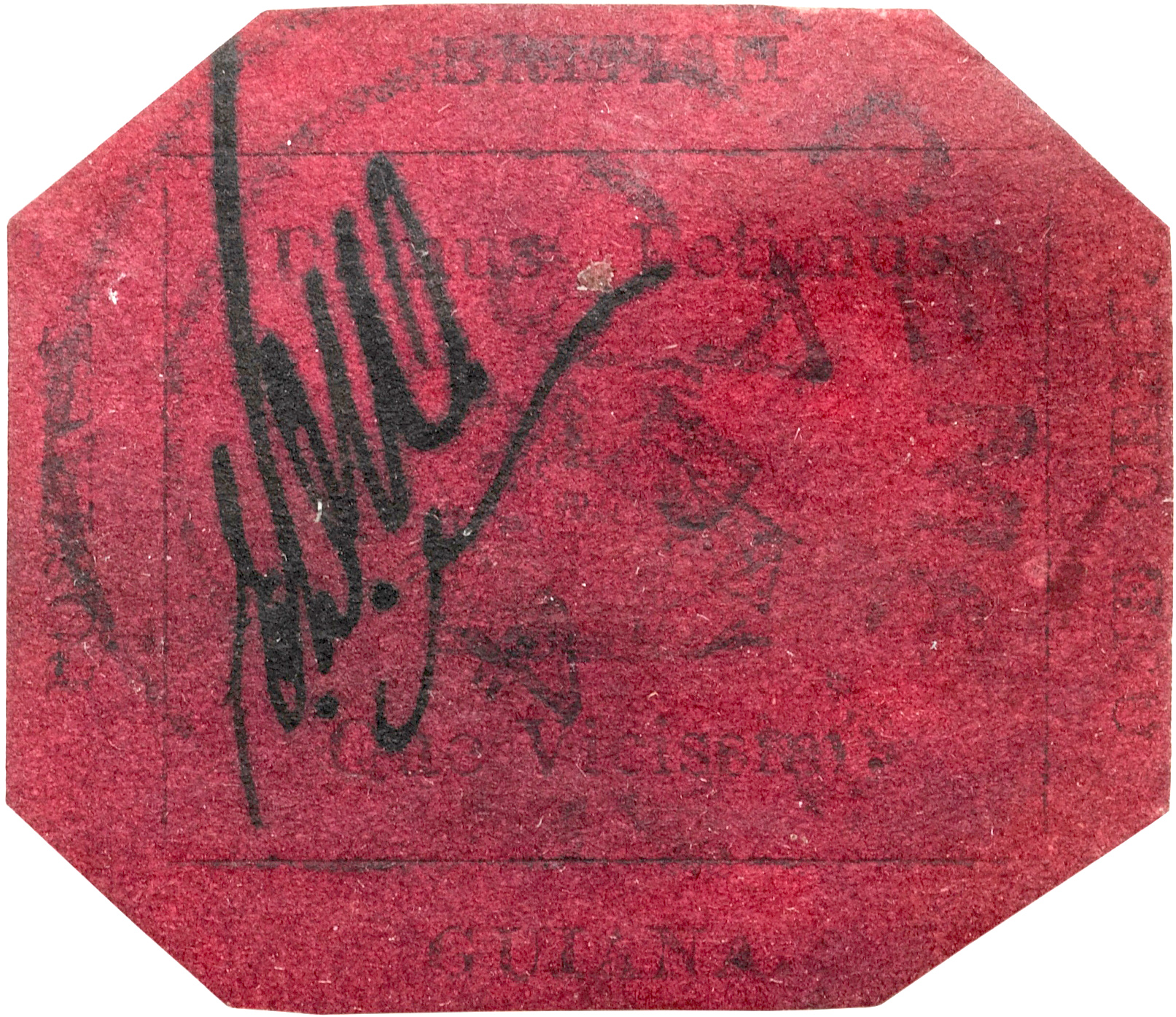
The most expensive single object by weight
The British Guiana 1c Magenta is a one-cent stamp printed locally in Demerara in 1856 because a regular shipment of stamps from London was delayed. Only one example is known to exist. It has changed hands six times across more than a century, most recently selling at public auction in 2014 for 9.48 million dollars and again in 2021 for 8.3 million.
How it survived
The single known example was discovered by a 12-year-old Scottish schoolboy in 1873 among family papers. He sold it shortly after for the equivalent of a few shillings. Each subsequent owner has signed the back of the stamp, creating an unusual visual provenance record on the verso of the stamp itself.
Why no second example
The 1856 emergency printing was small and locally produced, and the postmaster authorised postal clerks to initial each stamp before sale to deter forgery. The combination of a tiny print run, manual handling, and almost two centuries of attrition has left exactly one survivor. Authenticated by every major philatelic body and tracked through every change of ownership.
About This collectible
The British Guiana 1c Magenta (1856) is a notable entry in the collectible category. Whether you are a seasoned collector or evaluating your first piece, understanding provenance, condition, and market context is essential for confident decisions. This guide summarizes what makes this item collectible and how to evaluate examples in the market.
Identification & Authentication
Authenticating a British Guiana 1c Magenta (1856) requires attention to period-correct materials, manufacturing marks, signatures, and chain of custody documentation. Where third-party authentication exists (PSA, JSA, Beckett, SGC, PCGS, NGC, or category-specific authenticators), graded examples carry significant premium over raw pieces. Consult a recognized authenticator before high-value purchases.
Valuation & Market Pricing
Values for the British Guiana 1c Magenta (1856) vary by condition, provenance, completeness, and demand. Track recent sold prices on major venues including Heritage Auctions, Goldin, Christie’s, Sotheby’s, and eBay completed listings to benchmark fair market value. Realized sales reflect true value; asking prices do not.
Condition & Grading
Condition is the largest variable affecting value. Use the grading scale appropriate to the category and document defects honestly. For graded items, verify certification numbers on the grader’s website. For raw items, photograph all surfaces under neutral lighting and disclose any restoration or imperfections.
Where to Buy & Sell
Reputable venues include major auction houses, established dealer networks, specialty shows, and vetted online marketplaces. Avoid private cash transactions with unknown parties for high-value pieces. Use buyer protection or escrow when transacting at scale.
Frequently Asked Questions
How do I know if my British Guiana 1c Magenta (1856) is authentic?
Authenticity is best confirmed by a recognized third-party authenticator. Visual inspection alone is rarely sufficient for high-value pieces.
What is a British Guiana 1c Magenta (1856) worth?
Value depends on condition, provenance, and completeness. Check recent sold prices on major auction venues for comparable examples.
Where should I sell my British Guiana 1c Magenta (1856)?
For high-value pieces, established auction houses with category expertise typically deliver the best results. For mid-market items, vetted online marketplaces or dealer networks balance reach and fees.
Does grading add value?
For most categories, third-party grading adds meaningful value to top-condition examples. For lower-grade pieces, the grading fee can exceed the value uplift.
🔎 Buying or Selling This Item?
Affiliate links will appear here once configured in Settings → General.