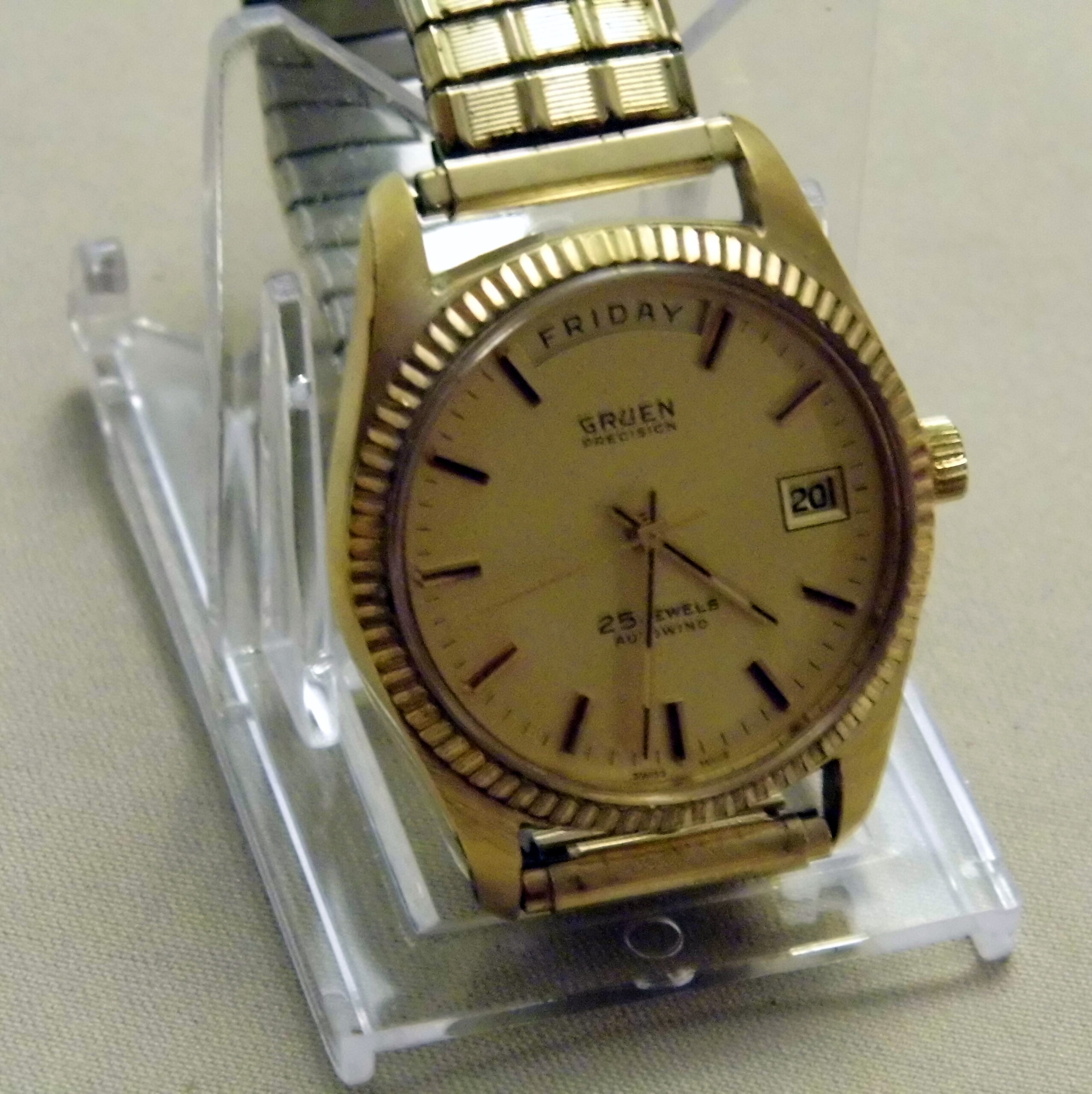
In vintage-watch collecting, provenance is not a footnote. For high-value references such as the Rolex Daytona “Paul Newman”, Patek Philippe perpetual calendars, and military-issue Omega Speedmasters, a complete documentation file routinely adds 20–50% to a hammer price compared with an identical, undocumented example. Building such a file is a multi-year project that begins the moment a watch enters a collection.
The five tiers of documentation
Auction houses rank provenance evidence in a rough hierarchy:
- Tier 1 — Original papers and stamped warranty card, dated and matching the case-back serial.
- Tier 2 — Period-correct hangtags, instruction manual, and original presentation box.
- Tier 3 — First-owner correspondence: the original purchase invoice, family photographs of the original owner wearing the watch, and personal letters mentioning the watch.
- Tier 4 — Service archive: dated service receipts from the manufacturer or recognised independent watchmakers, ideally an unbroken chain.
- Tier 5 — Auction history: previous catalogue entries from named houses, particularly when the watch has been illustrated.
Auction houses prefer to see physical original documents. Photocopies and scanned PDFs are accepted as supporting material but rarely move price by themselves. When a paper file is incomplete, a well-organised digital archive of high-resolution scans of every existing document is the next-best baseline.
The case-back inspection
The first thing a vintage-watch specialist does with a candidate purchase is open the case back. The reference number, serial number, and movement caliber must match the dial and the paperwork. Mismatches are not necessarily disqualifying — some watches were assembled with parts service-replaced under factory-correct procedure — but every mismatch must be explained, and the explanation forms part of the provenance file.
Service history: the line between “original” and “correct”
An entirely original watch is one whose dial, hands, crown, bracelet, and movement are exactly as the manufacturer delivered it decades ago. A correct watch is one whose service-replaced parts (commonly the crown and bracelet) are factory-spec for that reference. Period-correct service replacements are acceptable; non-period parts (a 2000s lume retrofit on a 1960s dial) are typically value-destroying. The provenance file should record every service the current owner authorises, including the watchmaker’s name, the parts replaced, and dated photographs of the dial and case before and after each service.
Photographic standards
Auction-grade photographs are taken under diffused, neutral lighting at 1:1 macro focal length. The standard set is: dial straight-on, dial at a 30-degree angle to reveal applied lume, case profile from each side, lug profile (especially polishing wear), case back, movement under the case back, and bracelet end-link to lug fit. These same photographs are used by manufacturers’ archive services (Rolex Archive Service, Patek Extract from Archives) when applying for an extract.
Apply for the manufacturer extract early, not at sale time. Patek Philippe’s Extract from Archives, Omega’s Extract of the Archives, and similar services can take months to issue and dramatically improve a file. Submitting at the start of ownership also reveals any inconsistency long before the watch is sent to auction.
Does service through the manufacturer always preserve value?
Generally yes for modern usage, but for the highest-end vintage references, manufacturer service can mean polished cases or replaced dials. Many advanced collectors prefer recognised independent specialists who explicitly preserve case geometry and original components.
Are photocopied papers acceptable provenance?
They are supporting evidence, not primary evidence. A photocopy of a warranty card from a known auction sale of the watch is meaningful; a freshly produced photocopy without traceable origin is not.
What is the single most valuable provenance piece for a 1960s–1970s sports chronograph?
A period photograph showing the original owner wearing the exact watch, ideally with date and location context. These rarely surface, and when they do, they often define the public narrative of the watch.
Frequently Asked Questions
Is this watches guide suitable for beginners?
Yes — this guide is written to be accessible to new collectors while remaining useful for intermediate enthusiasts. We layer foundational concepts with practical examples, expected price ranges, and authentication checkpoints so you can read once and reference repeatedly. If you are completely new, we recommend reading our beginner’s roadmap (/start-here/) alongside this material.
How current is the information in this watches guide?
This guide reflects 2026 market conditions, grading standards, and authentication best practices. We periodically refresh content as auction records, grading-service criteria, and counterfeit techniques evolve. The guide’s last-updated timestamp shown by your browser corresponds to our most recent factual review.
What’s the most common mistake collectors make in watches?
Buying before learning. The hobby rewards patience: collectors who spend the first 60-90 days reading, attending shows, watching auction results, and asking questions in established communities consistently outperform those who buy aggressively from day one. Education compounds; impulse purchases rarely do.
Where can I get items in watches authenticated?
For most categories, established third-party authenticators include PSA, BGS, CGC, and SGC for cards; PCGS and NGC for coins; BBCE for sealed Pokémon and sports wax; AFA for toys; and recognized industry experts or auction-house specialists for watches, autographs, and fine collectibles. Independent verification typically costs $20-$200 and is well worth it for any item over $500. See our /authentication-hub/ for category-specific recommendations.
How do I sell watches for the best price?
Match the venue to the value. Items under $100: eBay or Facebook collector groups. Items $100-$1,000: eBay with strong photography and detailed descriptions, or category-specific platforms (StockX, Discogs, Catawiki). Items over $1,000: established auction houses (Heritage, Goldin, Christie’s, Phillips) or vetted dealer consignment. Avoid pawn shops (typical offers: 20-40% of fair value) and unverified buyers offering instant cash.