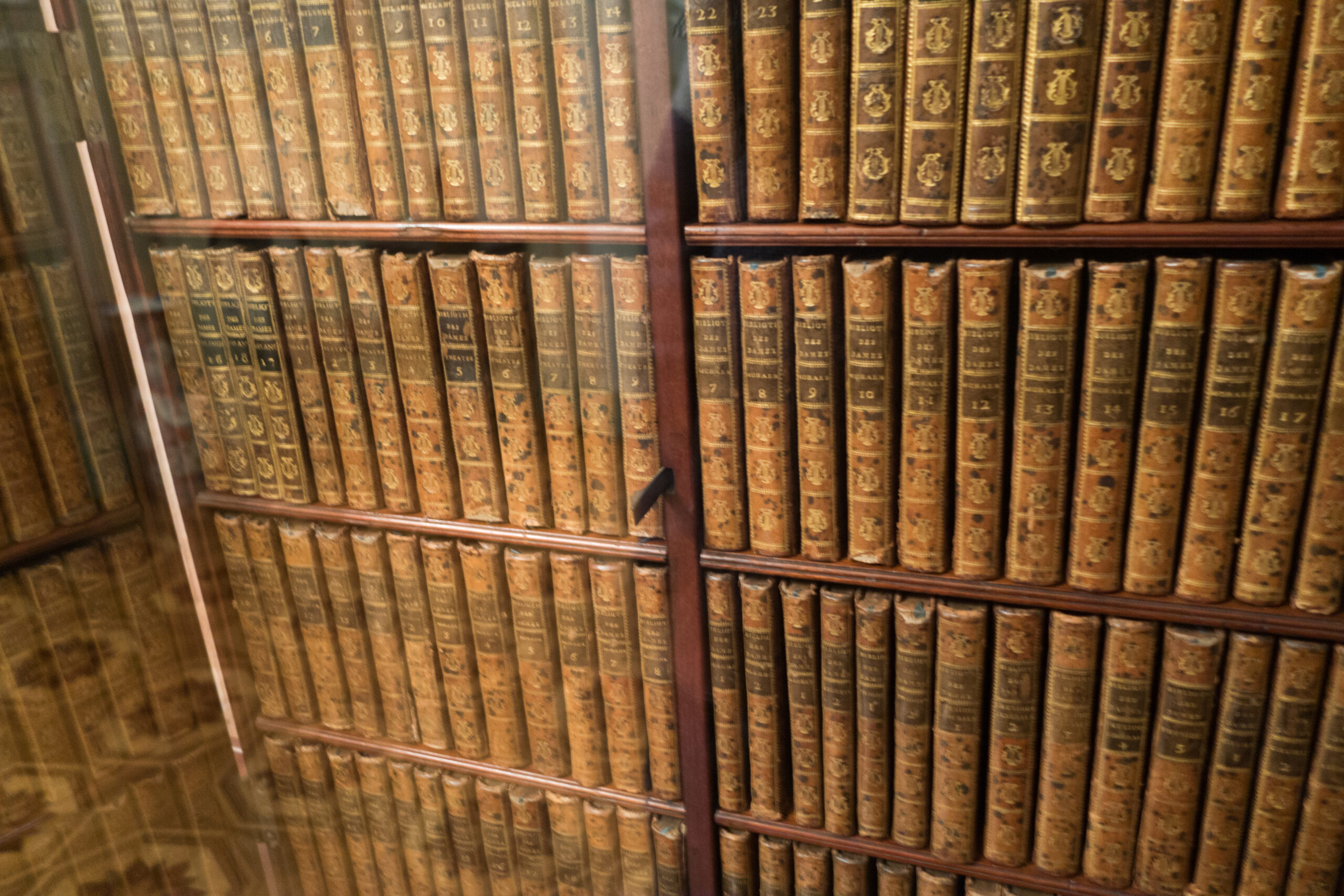
Why dust jackets dominate value
For most modern first editions, the dust jacket represents 70 to 95 percent of the book’s collector value. A first edition Gatsby without DJ might sell for thousands; with a fine DJ, hundreds of thousands. Preserving the dust jacket on books you own is the single highest-leverage activity in book collecting.
Mylar covers
Archival-quality polyester (Mylar) dust jacket covers protect the original DJ from handling, light exposure, and moisture. Brodart covers are the recognised standard, available in multiple sizes. The cover does not adhere to the DJ; it slides on and off, allowing the DJ to remain in original condition while protected.
Storage orientation
Store first editions vertically on shelves with adjacent books for support, never leaning. Avoid direct sunlight, which fades dust jacket spine colour rapidly. Maintain humidity between 40 and 50 percent; drier conditions cause paper to become brittle, wetter conditions encourage foxing.
What to never do
Never tape, glue, or laminate a dust jacket. Never trim a dust jacket to fit — dust jacket clipping (cutting off the price corner) reduces value substantially even if the rest is pristine. Never write on the dust jacket or place stickers on it. The DJ is irreplaceable.
Frequently Asked Questions
Is this collectibles guide suitable for beginners?
Yes — this guide is written to be accessible to new collectors while remaining useful for intermediate enthusiasts. We layer foundational concepts with practical examples, expected price ranges, and authentication checkpoints so you can read once and reference repeatedly. If you are completely new, we recommend reading our beginner’s roadmap (/start-here/) alongside this material.
How current is the information in this collectibles guide?
This guide reflects 2026 market conditions, grading standards, and authentication best practices. We periodically refresh content as auction records, grading-service criteria, and counterfeit techniques evolve. The guide’s last-updated timestamp shown by your browser corresponds to our most recent factual review.
What’s the most common mistake collectors make in collectibles?
Buying before learning. The hobby rewards patience: collectors who spend the first 60-90 days reading, attending shows, watching auction results, and asking questions in established communities consistently outperform those who buy aggressively from day one. Education compounds; impulse purchases rarely do.
Where can I get items in collectibles authenticated?
For most categories, established third-party authenticators include PSA, BGS, CGC, and SGC for cards; PCGS and NGC for coins; BBCE for sealed Pokémon and sports wax; AFA for toys; and recognized industry experts or auction-house specialists for watches, autographs, and fine collectibles. Independent verification typically costs $20-$200 and is well worth it for any item over $500. See our /authentication-hub/ for category-specific recommendations.
How do I sell collectibles for the best price?
Match the venue to the value. Items under $100: eBay or Facebook collector groups. Items $100-$1,000: eBay with strong photography and detailed descriptions, or category-specific platforms (StockX, Discogs, Catawiki). Items over $1,000: established auction houses (Heritage, Goldin, Christie’s, Phillips) or vetted dealer consignment. Avoid pawn shops (typical offers: 20-40% of fair value) and unverified buyers offering instant cash.