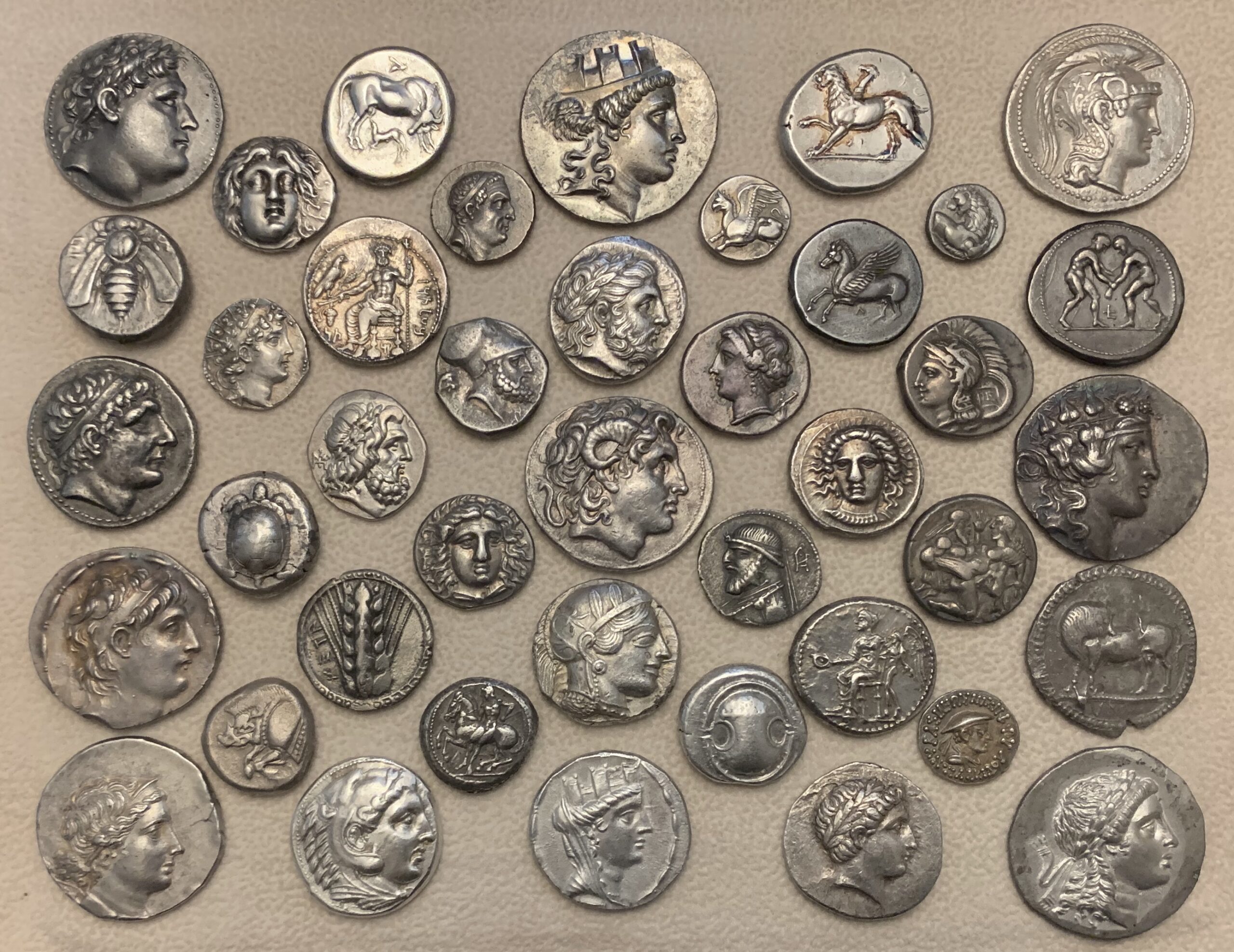
Counterfeit coins have existed for as long as coinage itself, and modern forgers have access to alarmingly good tools. Yet most fakes still fail at least one of five tests — weight, dimensions, edge, surface, and sound. A careful collector who runs through this checklist quietly catches most deceptions before money changes hands.
1. Weight and dimensions
Every official coin has a published weight, diameter, and thickness recorded by the issuing mint. A digital scale accurate to 0.01 g and a calliper accurate to 0.05 mm cost very little and rule out a surprising share of fakes immediately. If a coin is more than about 1% off either spec, treat it as suspect.
2. Edge inspection
Many silver and gold issues have specific reeding (groove) counts on the edge, or carry edge inscriptions. A magnifier and a published reeding count for the type are powerful screening tools. Cast forgeries often have soft, uneven, or missing edge detail.
3. Surface and lustre
Genuine struck coins show a flow-line pattern under angled light — a very fine radial texture left by the dies. Cast fakes show a slightly grainy, frosted texture and may have small pits where air bubbles formed in the mould. Under a 10x loupe, the difference is almost always visible.
4. The ping test
Balance a silver coin on a fingertip and tap it gently with another coin. Genuine silver gives a clear, lingering ring. Lead, tin, or plated base-metal fakes give a dull thud. The ping test is not foolproof but it is fast and free.
5. Magnetism and density
Silver and gold are not magnetic. A coin that sticks to a small neodymium magnet is almost certainly base metal. For higher-value pieces, specific gravity testing using water displacement is the gold standard.
When in doubt, send it
For any purchase above a comfortable loss threshold, buy from a reputable dealer who guarantees authenticity, or have the coin certified by PCGS or NGC. The grading fee is much smaller than the cost of a convincing fake.
Frequently Asked Questions
Is this coins guide suitable for beginners?
Yes — this guide is written to be accessible to new collectors while remaining useful for intermediate enthusiasts. We layer foundational concepts with practical examples, expected price ranges, and authentication checkpoints so you can read once and reference repeatedly. If you are completely new, we recommend reading our beginner’s roadmap (/start-here/) alongside this material.
How current is the information in this coins guide?
This guide reflects 2026 market conditions, grading standards, and authentication best practices. We periodically refresh content as auction records, grading-service criteria, and counterfeit techniques evolve. The guide’s last-updated timestamp shown by your browser corresponds to our most recent factual review.
What’s the most common mistake collectors make in coins?
Buying before learning. The hobby rewards patience: collectors who spend the first 60-90 days reading, attending shows, watching auction results, and asking questions in established communities consistently outperform those who buy aggressively from day one. Education compounds; impulse purchases rarely do.
Where can I get items in coins authenticated?
For most categories, established third-party authenticators include PSA, BGS, CGC, and SGC for cards; PCGS and NGC for coins; BBCE for sealed Pokémon and sports wax; AFA for toys; and recognized industry experts or auction-house specialists for watches, autographs, and fine collectibles. Independent verification typically costs $20-$200 and is well worth it for any item over $500. See our /authentication-hub/ for category-specific recommendations.
How do I sell coins for the best price?
Match the venue to the value. Items under $100: eBay or Facebook collector groups. Items $100-$1,000: eBay with strong photography and detailed descriptions, or category-specific platforms (StockX, Discogs, Catawiki). Items over $1,000: established auction houses (Heritage, Goldin, Christie’s, Phillips) or vetted dealer consignment. Avoid pawn shops (typical offers: 20-40% of fair value) and unverified buyers offering instant cash.