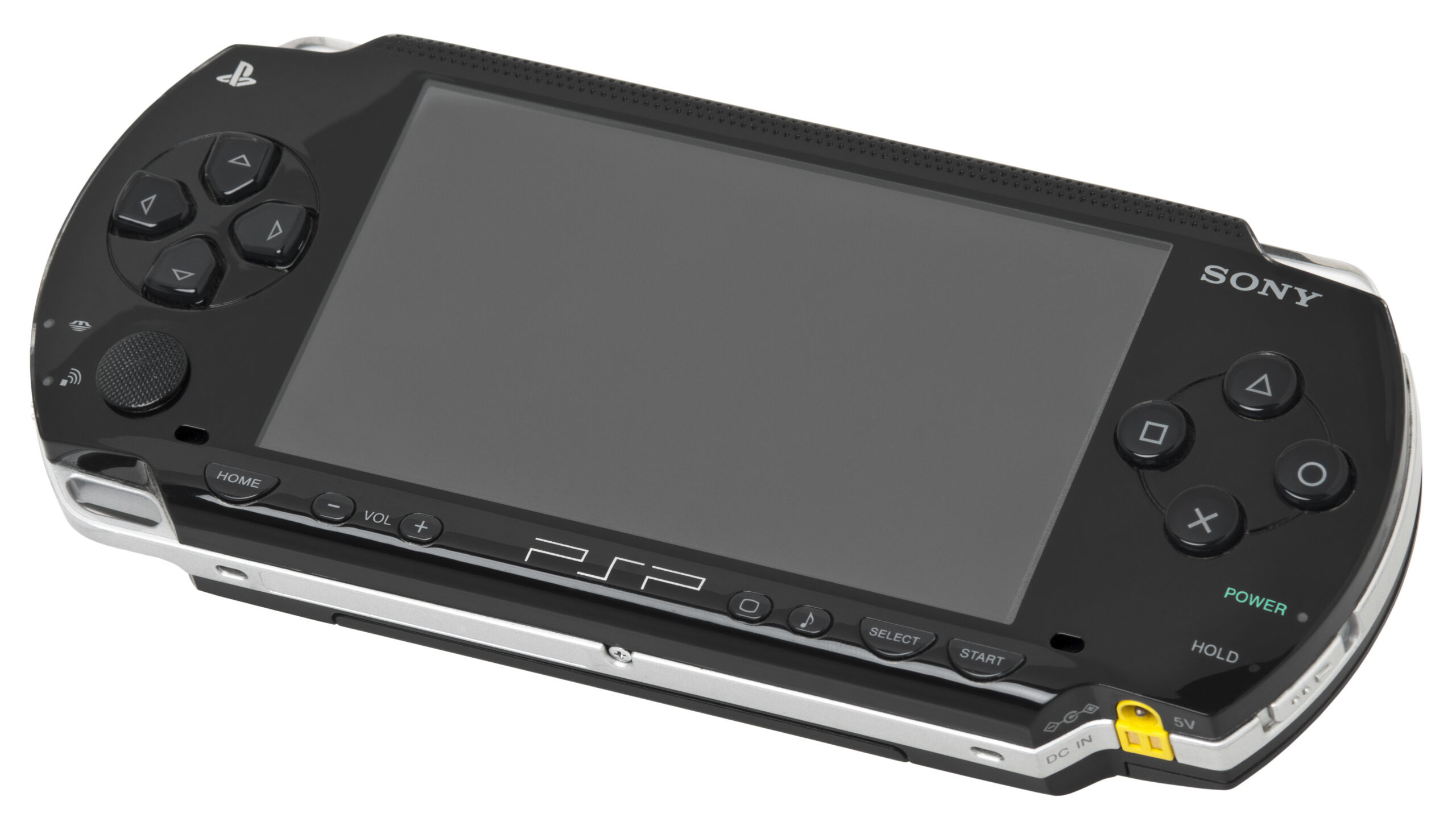
Engineering prototypes of the Sony PSP Go (PSP-N1000) — the digital-only handheld released in 2009 — occupy a fascinating niche of video game collecting. Pre-production “EVT” (Engineering Verification Test) and “DVT” (Design Verification Test) units, distinguishable by special labels and incomplete firmware, have sold for $3,000–$8,000 to specialist collectors.
Why prototype hardware matters
Most consumer electronics history is invisible to the public. Engineering prototypes — the units that travel between Sony’s labs, third-party developers and certification offices — are the surviving evidence of how a product actually came together. They reveal abandoned ideas (different button layouts, alternative screens, internal codenames) and provide a direct hands-on link to the engineers who built the device. The PSP Go itself is historically interesting as Sony’s first download-only handheld and a commercial failure that nonetheless predicted the all-digital direction the industry eventually took.
How to identify a real prototype
Genuine PSP Go prototypes typically show an internal “EVT-X” or “DVT-X” silkscreen on a sticker over the battery compartment, a non-final firmware version that boots into a developer menu, missing or partial regional logos, and absence of consumer FCC/CE certification labels. Mass-production retail units have full glossy packaging, complete consumer manuals and final firmware. Counterfeits are unusual but possible; a legitimate prototype almost always comes with provenance to a Sony employee, a third-party developer studio or a leaked production batch.
Condition and value
Prototype units are typically functional but cosmetically rough — heavy hand-marking, scuffed plastics and replacement screws are normal and do not significantly reduce value. What matters is firmware version (earlier = more valuable to enthusiasts), original developer documentation, and any associated test cartridges or memory sticks. Public sales are rare but recorded prices include $3,200 for a basic EVT unit (Yahoo Japan, 2021) and $7,800 for a documented DVT with original Sony notes (eBay, 2022).
Where to see prototypes
The Strong National Museum of Play, the National Videogame Museum (Frisco, Texas) and the Computerspielemuseum (Berlin) have prototype hardware on display. Retro game shows like Portland Retro Gaming Expo, MAGFest and Tokyo Game Show frequently feature prototype showcases.
For families and beginners
Production retail PSPs — both the original PSP-1000 (“phat”) and the slim PSP-2000/3000 — are abundant on the secondary market for $50–$150 with a healthy aftermarket scene. They make wonderful first handhelds for young gamers. The PSP also has a thriving homebrew community, including educational programming tools, that can introduce older children to game development.
Care and storage
Lithium-ion batteries from 2009 are now end-of-life. Replace with modern aftermarket cells or store the unit with the battery removed and at 50% charge. Avoid leaving prototype units powered on for extended periods — early firmware can be unstable. Document and photograph any internal labels before any servicing.
Read next
Explore the broader prototype hardware world: pre-production PlayStation 1 “Net Yaroze” devkits, Nintendo 64DD development units, and the famous “Star Fox” Super FX chip prototypes.
About This collectible
The Sony PSP "Go" Prototype (Engineering Sample) is a notable entry in the collectible category. Whether you are a seasoned collector or evaluating your first piece, understanding provenance, condition, and market context is essential for confident decisions. This guide summarizes what makes this item collectible and how to evaluate examples in the market.
Identification & Authentication
Authenticating a Sony PSP "Go" Prototype (Engineering Sample) requires attention to period-correct materials, manufacturing marks, signatures, and chain of custody documentation. Where third-party authentication exists (PSA, JSA, Beckett, SGC, PCGS, NGC, or category-specific authenticators), graded examples carry significant premium over raw pieces. Consult a recognized authenticator before high-value purchases.
Valuation & Market Pricing
Values for the Sony PSP "Go" Prototype (Engineering Sample) vary by condition, provenance, completeness, and demand. Track recent sold prices on major venues including Heritage Auctions, Goldin, Christie’s, Sotheby’s, and eBay completed listings to benchmark fair market value. Realized sales reflect true value; asking prices do not.
Condition & Grading
Condition is the largest variable affecting value. Use the grading scale appropriate to the category and document defects honestly. For graded items, verify certification numbers on the grader’s website. For raw items, photograph all surfaces under neutral lighting and disclose any restoration or imperfections.
Where to Buy & Sell
Reputable venues include major auction houses, established dealer networks, specialty shows, and vetted online marketplaces. Avoid private cash transactions with unknown parties for high-value pieces. Use buyer protection or escrow when transacting at scale.
Frequently Asked Questions
How do I know if my Sony PSP "Go" Prototype (Engineering Sample) is authentic?
Authenticity is best confirmed by a recognized third-party authenticator. Visual inspection alone is rarely sufficient for high-value pieces.
What is a Sony PSP "Go" Prototype (Engineering Sample) worth?
Value depends on condition, provenance, and completeness. Check recent sold prices on major auction venues for comparable examples.
Where should I sell my Sony PSP "Go" Prototype (Engineering Sample)?
For high-value pieces, established auction houses with category expertise typically deliver the best results. For mid-market items, vetted online marketplaces or dealer networks balance reach and fees.
Does grading add value?
For most categories, third-party grading adds meaningful value to top-condition examples. For lower-grade pieces, the grading fee can exceed the value uplift.
🔎 Buying or Selling This Item?
Affiliate links will appear here once configured in Settings → General.