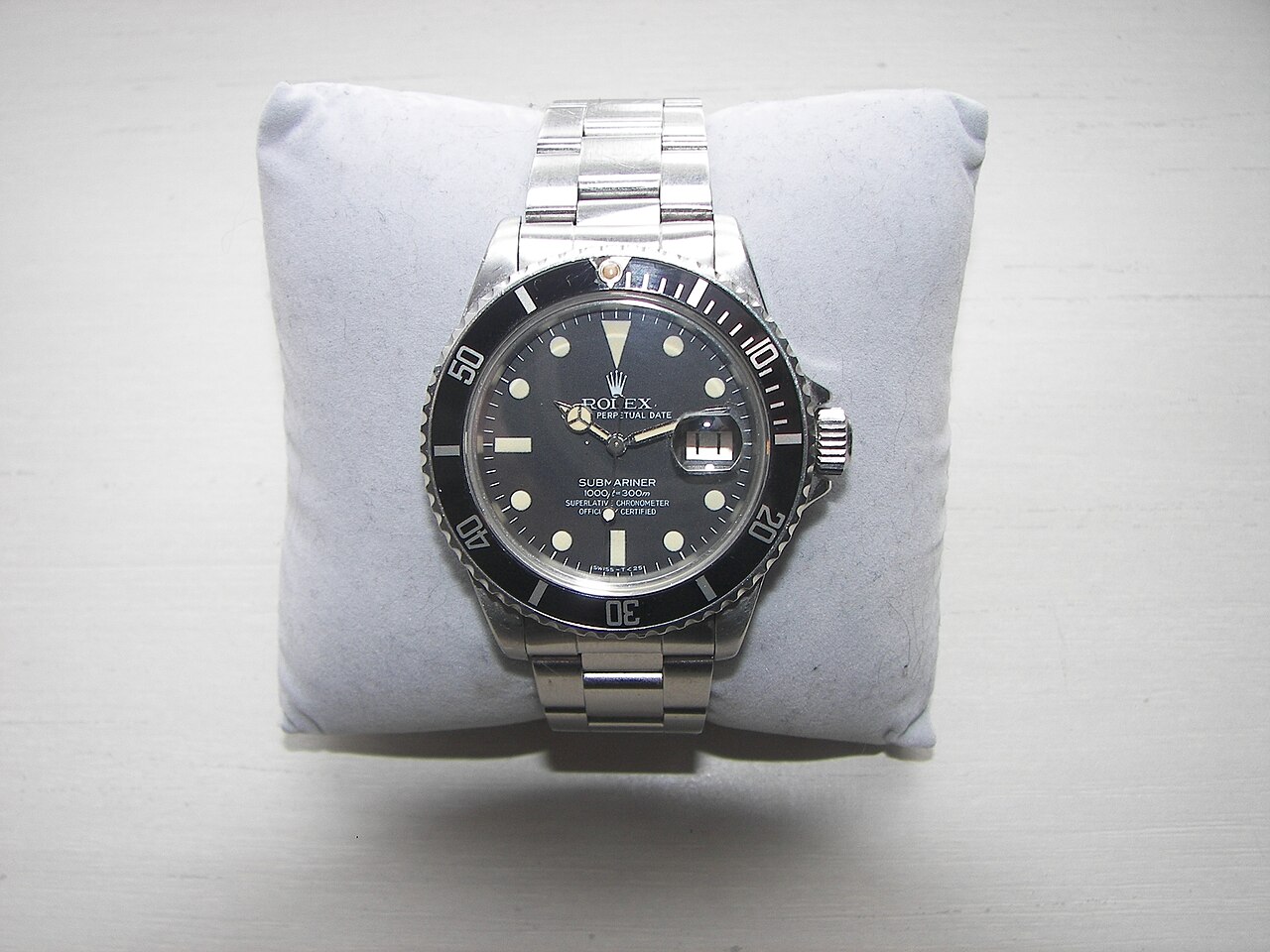
Counterfeit Rolex watches have become extraordinarily sophisticated. Some “super clones” are nearly indistinguishable from genuine articles without expert assessment. Here’s the complete authentication checklist.
Test 1: The weight
Genuine Rolex watches use solid gold (where applicable), 904L stainless steel, and proprietary alloys. Genuine Submariners weigh 155-160g; fakes commonly come in at 130-140g.
Test 2: The cyclops magnifier
Genuine Rolex cyclops magnifies the date 2.5×. Counterfeit cyclops typically magnify only 1.5-1.7×. Place a date directly under the cyclops; a genuine Rolex shows the digit nearly filling the bubble.
Test 3: The serial number and reference
Genuine serials are deeply etched between the 6 o’clock lugs (modern: also engraved on the rehaut, the inner ring around the dial). Reference numbers go between the 12 o’clock lugs. Counterfeits use shallow laser-etched marks; genuine ones are visibly diamond-cut deep.
Test 4: The movement
Open the caseback (or have a watchmaker do it). Genuine Rolex movements use the Calibre 31xx, 32xx, or 36xx series. Each is identifiable by the rotor design, balance wheel, and decoration. Counterfeits use cheap automatic ETA or Asian movements with painted “Rolex” markings.
Test 5: The bracelet and clasp
Genuine Oyster bracelets have specific weight, link articulation, and clasp engineering. Counterfeit bracelets feel light, have wobbly links, and have flimsy clasp mechanics. Genuine clasps engage with a precise click.
Test 6: The hologram and warranty card
1989-2002 Rolex used holographic case-back stickers. 2002-2014 used different printed stickers. Modern (2014+) use no sticker at all but include warranty card with hologram serial. Counterfeits often include forged stickers.
Test 7: The crown logo
Compare the crown logo at 12 o’clock on the dial. Genuine has crisp, defined points; fake versions are typically rounded or asymmetric.
Test 8: The date wheel font
Genuine Rolex date wheels use a specific serif font with very precise alignment. Counterfeit date wheels are often slightly off-axis or use a generic font.
Test 9: Take it to a watchmaker
For any Rolex over $5K, professional inspection by an authorised dealer or independent watchmaker is essential. Cost: $50-200. Worth it.
Step 10: Get a Rolex extract from the archives
Rolex provides “extracts” (factory archive certificates) for vintage watches confirming reference, serial, and original specifications. Cost: ~$200. Mandatory for any vintage Rolex over $20K.
FAQ
Can a Rolex be partially fake?
Yes — “Frankenwatches” combine genuine cases with replacement movements, dials, or bracelets. Authentication of every component is necessary.
Are aftermarket parts okay?
For service replacements (lume, gaskets, crystals), yes. For dials, hands, and bezels, no — they destroy 30-70% of vintage value.
You Might Also Like
Frequently Asked Questions
Is this watches guide suitable for beginners?
Yes — this guide is written to be accessible to new collectors while remaining useful for intermediate enthusiasts. We layer foundational concepts with practical examples, expected price ranges, and authentication checkpoints so you can read once and reference repeatedly. If you are completely new, we recommend reading our beginner’s roadmap (/start-here/) alongside this material.
How current is the information in this watches guide?
This guide reflects 2026 market conditions, grading standards, and authentication best practices. We periodically refresh content as auction records, grading-service criteria, and counterfeit techniques evolve. The guide’s last-updated timestamp shown by your browser corresponds to our most recent factual review.
What’s the most common mistake collectors make in watches?
Buying before learning. The hobby rewards patience: collectors who spend the first 60-90 days reading, attending shows, watching auction results, and asking questions in established communities consistently outperform those who buy aggressively from day one. Education compounds; impulse purchases rarely do.
Where can I get items in watches authenticated?
For most categories, established third-party authenticators include PSA, BGS, CGC, and SGC for cards; PCGS and NGC for coins; BBCE for sealed Pokémon and sports wax; AFA for toys; and recognized industry experts or auction-house specialists for watches, autographs, and fine collectibles. Independent verification typically costs $20-$200 and is well worth it for any item over $500. See our /authentication-hub/ for category-specific recommendations.
How do I sell watches for the best price?
Match the venue to the value. Items under $100: eBay or Facebook collector groups. Items $100-$1,000: eBay with strong photography and detailed descriptions, or category-specific platforms (StockX, Discogs, Catawiki). Items over $1,000: established auction houses (Heritage, Goldin, Christie’s, Phillips) or vetted dealer consignment. Avoid pawn shops (typical offers: 20-40% of fair value) and unverified buyers offering instant cash.