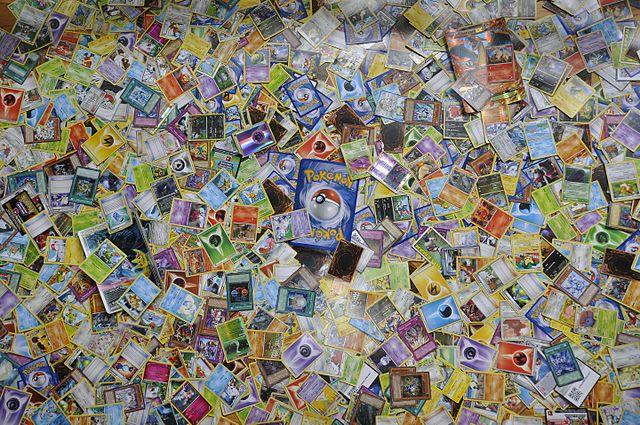
Counterfeit Pokémon cards have become extremely sophisticated. Modern fakes can pass a casual glance — even some experienced collectors. This decision tree walks you through every test, in order of effectiveness.
Test 1: The light test (60 seconds)
Hold the card up to a strong light source. Genuine Pokémon cards have a thin black ink layer between the front and back, making them mostly opaque. Fake cards typically show light passing through. This single test catches over 70% of fakes.
Test 2: The rip test (last resort, destroys the card)
If you have multiple copies of a card you suspect is fake, tear one corner. Genuine cards reveal a black ink layer in the middle. Fakes show plain cardboard or coloured paper. Don’t do this on a card you’re about to sell.
Test 3: The texture and gloss
Genuine Pokémon cards have a distinctive matte texture on holos with a “rainbow” sheen at angles. Fakes often have either too-glossy or completely matte surfaces. Hold the card at a 45-degree angle and rotate slowly under good light. Genuine holos show the rainbow effect; fakes typically show a uniform shimmer.
Test 4: The font and spelling
Counterfeits commonly mis-render: Pokémon spellings (some omit the accent), HP values (font weight differences), Energy symbols, and copyright text on the bottom edge. Compare to a known genuine card from the same set.
Test 5: The corners and edges
Genuine cards have crisp, square corners and smooth edges. Fakes often have slightly rounded corners and rough or fuzzy edges (a sign of cheaper card stock). Use a 10× loupe.
Test 6: The back of the card
Compare the blue Pokémon card-back colour, the swirl pattern, and the position of the Pokeball logo. Counterfeits use slightly off-shade blue or different swirl orientations. The “Pokémon” wordmark on the back has specific kerning and positioning that varies set-to-set; reproductions get this wrong.
Test 7: The set symbol
The bottom-right corner symbol identifies the set. Counterfeits sometimes use the wrong symbol for the card (e.g., a Base Set symbol on a card that should be Jungle), or use a slightly off-shape symbol. Check against the official Bulbapedia database.
Test 8: Weight and thickness
Genuine cards weigh 1.7-1.9 grams and are approximately 0.32 mm thick. A precision scale (0.01g) and digital micrometer can verify. Fakes are commonly 1.5g or 2.0g+.
Test 9: Black light test
Under UV (black) light, genuine card stock has very mild fluorescence. Modern counterfeits often glow brightly under UV due to optical brighteners in cheaper paper.
Test 10: Compare to a known genuine card
If you have any single genuine card from the same set, side-by-side comparison reveals all of the above issues at once. This is the most reliable home test.
When to send to a grading service
If after these tests you’re 90%+ confident the card is genuine and worth $100+, send it to PSA, CGC, or BGS. Their authentication step is included in grading. They reject and clearly mark counterfeit submissions; you’ll learn definitively.
Where counterfeits come from
The vast majority of counterfeit Pokémon cards originate from China and circulate primarily through (a) Aliexpress and similar platforms, (b) Facebook Marketplace and Craigslist private sales, (c) “estate sale” listings on eBay where the seller doesn’t actually know what they have. Verified eBay top-rated sellers, TCGplayer, and major card shops have far lower counterfeit incidence.
FAQ
Are common Pokémon cards counterfeited?
Rarely. Counterfeiters target high-value cards: 1st Edition Base Set holos, Charizard variants, Pikachu Illustrator, tournament prize cards.
Can a fake card be PSA-slabbed?
PSA’s authentication step rejects counterfeits. A genuine PSA slab is itself authenticated by serial number on PSA’s certification database.
Are Japanese Pokémon cards more or less commonly counterfeit?
About the same rate, but Japanese counterfeiters have improved more rapidly in recent years. Tournament prize and 1st Edition Japanese cards are heavily targeted.
You Might Also Like
Frequently Asked Questions
Is this Pokémon cards guide suitable for beginners?
Yes — this guide is written to be accessible to new collectors while remaining useful for intermediate enthusiasts. We layer foundational concepts with practical examples, expected price ranges, and authentication checkpoints so you can read once and reference repeatedly. If you are completely new, we recommend reading our beginner’s roadmap (/start-here/) alongside this material.
How current is the information in this Pokémon cards guide?
This guide reflects 2026 market conditions, grading standards, and authentication best practices. We periodically refresh content as auction records, grading-service criteria, and counterfeit techniques evolve. The guide’s last-updated timestamp shown by your browser corresponds to our most recent factual review.
What’s the most common mistake collectors make in Pokémon cards?
Buying before learning. The hobby rewards patience: collectors who spend the first 60-90 days reading, attending shows, watching auction results, and asking questions in established communities consistently outperform those who buy aggressively from day one. Education compounds; impulse purchases rarely do.
Where can I get items in Pokémon cards authenticated?
For most categories, established third-party authenticators include PSA, BGS, CGC, and SGC for cards; PCGS and NGC for coins; BBCE for sealed Pokémon and sports wax; AFA for toys; and recognized industry experts or auction-house specialists for watches, autographs, and fine collectibles. Independent verification typically costs $20-$200 and is well worth it for any item over $500. See our /authentication-hub/ for category-specific recommendations.
How do I sell Pokémon cards for the best price?
Match the venue to the value. Items under $100: eBay or Facebook collector groups. Items $100-$1,000: eBay with strong photography and detailed descriptions, or category-specific platforms (StockX, Discogs, Catawiki). Items over $1,000: established auction houses (Heritage, Goldin, Christie’s, Phillips) or vetted dealer consignment. Avoid pawn shops (typical offers: 20-40% of fair value) and unverified buyers offering instant cash.