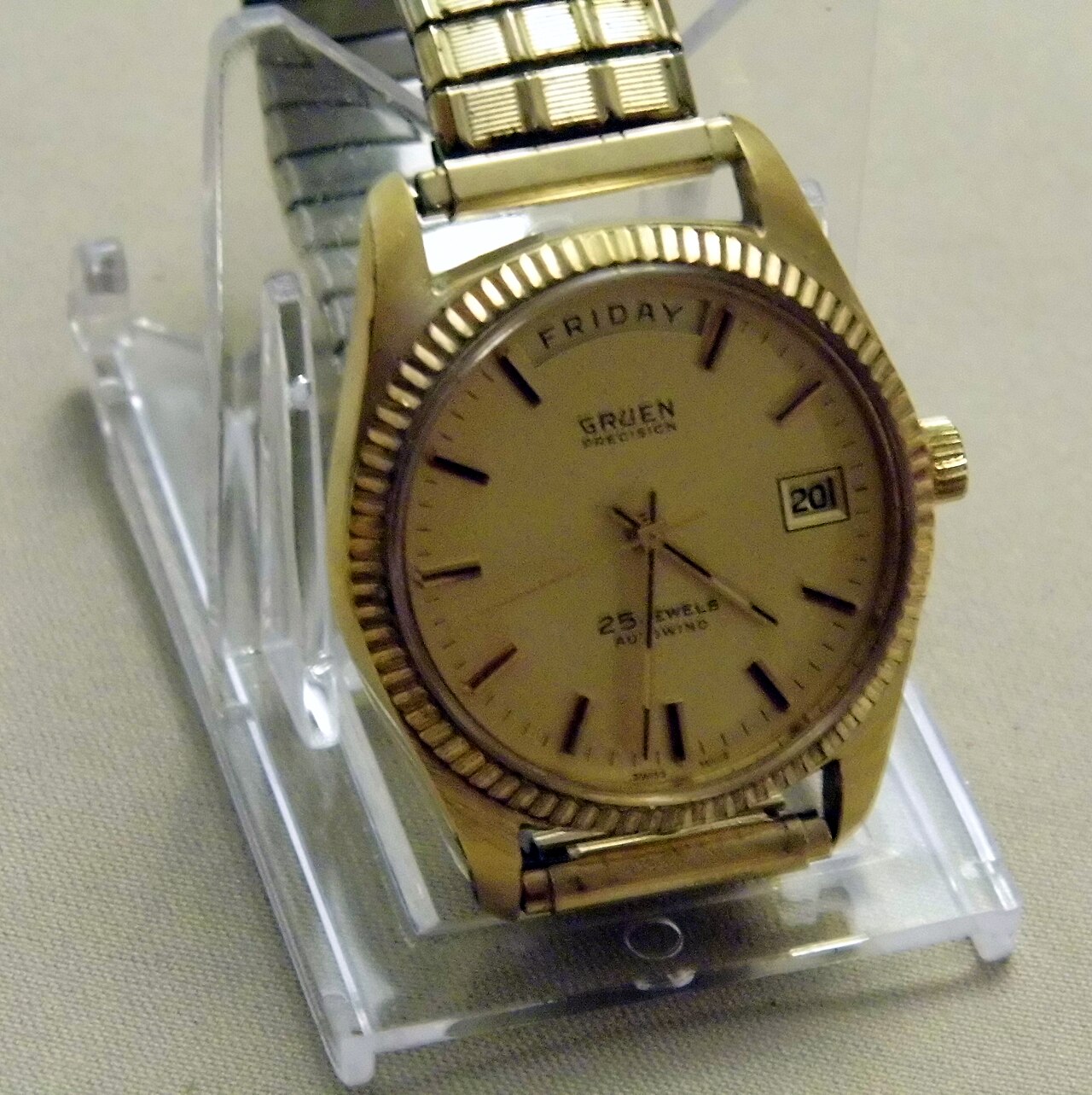
Watches range from $20 fashion pieces to $30M+ Patek Philippes. Identifying yours requires careful examination. Here’s the full process.
Step 1: Identify the brand and model
Look at the dial, caseback, and movement. Major brands have catalogued reference numbers: Rolex (e.g., 6263, 116710), Omega (e.g., 145.022, 2998), Patek (e.g., 5711, 1518). Strange or unfamiliar markings often indicate either a forgery or a small independent maker.
Step 2: Verify reference and serial numbers
Reference number identifies the model; serial number identifies the production year. The major brands maintain online or extract-based databases — Rolex doesn’t publicly verify serials but provides extracts on request; Patek Philippe and Audemars Piguet publish “extract from the archives” for $$ that confirm originality.
Step 3: Assess originality
The single biggest value driver in vintage watches is “original” — original dial, hands, bezel, crown, bracelet. Replaced parts from service exchanges destroy 30-70% of value. A “service dial” Rolex 6263 is $40K; an original “Big Red” Daytona dial is $200K-2M.
Step 4: Original box and papers
The original box, warranty papers, hangtags, and service history can double or triple a vintage watch’s value. The “full set” with all original ephemera is the gold standard.
Step 5: Service history
Documented manufacturer or specialist service every 4-7 years matters. Watches with no service history are riskier purchases — buyers discount 10-20% for unknown service status.
Step 6: Compare to recent sales
Phillips, Christie’s, Sotheby’s, Antiquorum, and Heritage Auctions catalogue every major sale with hammer prices. Chrono24 tracks dealer asking prices (treat as upper bound). WatchCharts and WatchExchange provide price-tracking data.
Step 7: Choose where to sell
Under $5K: Chrono24, eBay, local jewellers. $5K-50K: Chrono24 with reputable seller status, specialist dealers. $50K+: Phillips, Christie’s, Sotheby’s, Antiquorum live auction. Above $500K: white-glove auctions only.
Common high-value indicators
- Patek Philippe perpetual calendar chronographs (refs. 1518, 2499, 3970)
- Rolex Daytona ref. 6239 with “Paul Newman” exotic dial
- Rolex Submariner ref. 6538 (Bond)
- Audemars Piguet Royal Oak ref. 5402 A-Series
- Omega Speedmaster Pre-Moon CK2998
- Vintage F.P. Journe (only 100-300 of any model exist)
FAQ
Is my grandfather’s watch valuable?
Possibly. Identify the brand and reference number first. Mass-market 1950s-70s watches are often $50-500. Patek Philippe, Rolex, Audemars Piguet, Vacheron Constantin pieces from any era warrant professional appraisal.
Are quartz watches worth anything?
Most no. Exceptions: original Seiko Astron 1969 (the first quartz watch), certain Citizen and Casio limited editions, vintage Omega Megaquartz. Most quartz watches are $20-200.
You Might Also Like
Frequently Asked Questions
Is this watches guide suitable for beginners?
Yes — this guide is written to be accessible to new collectors while remaining useful for intermediate enthusiasts. We layer foundational concepts with practical examples, expected price ranges, and authentication checkpoints so you can read once and reference repeatedly. If you are completely new, we recommend reading our beginner’s roadmap (/start-here/) alongside this material.
How current is the information in this watches guide?
This guide reflects 2026 market conditions, grading standards, and authentication best practices. We periodically refresh content as auction records, grading-service criteria, and counterfeit techniques evolve. The guide’s last-updated timestamp shown by your browser corresponds to our most recent factual review.
What’s the most common mistake collectors make in watches?
Buying before learning. The hobby rewards patience: collectors who spend the first 60-90 days reading, attending shows, watching auction results, and asking questions in established communities consistently outperform those who buy aggressively from day one. Education compounds; impulse purchases rarely do.
Where can I get items in watches authenticated?
For most categories, established third-party authenticators include PSA, BGS, CGC, and SGC for cards; PCGS and NGC for coins; BBCE for sealed Pokémon and sports wax; AFA for toys; and recognized industry experts or auction-house specialists for watches, autographs, and fine collectibles. Independent verification typically costs $20-$200 and is well worth it for any item over $500. See our /authentication-hub/ for category-specific recommendations.
How do I sell watches for the best price?
Match the venue to the value. Items under $100: eBay or Facebook collector groups. Items $100-$1,000: eBay with strong photography and detailed descriptions, or category-specific platforms (StockX, Discogs, Catawiki). Items over $1,000: established auction houses (Heritage, Goldin, Christie’s, Phillips) or vetted dealer consignment. Avoid pawn shops (typical offers: 20-40% of fair value) and unverified buyers offering instant cash.