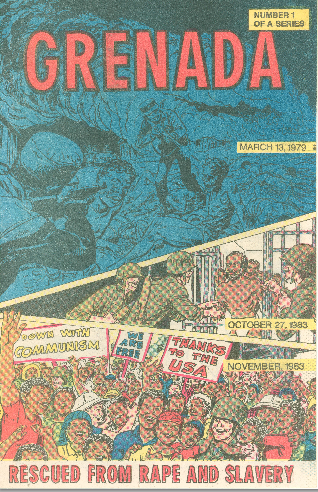
Comic books span a century and several distinct eras, each with very different value mechanics. This guide walks you through identifying your comic, grading it, and figuring out what it’s actually worth.
Step 1: Identify the era
- Platinum Age (pre-1938): Pre-superhero comics. Most valuable: rare Sunday newspaper comics, Famous Funnies #1.
- Golden Age (1938-1956): First Superman, Batman, Captain America, Wonder Woman. Highest-valued category by a wide margin.
- Silver Age (1956-1970): First Marvel superheroes (Spider-Man, X-Men, Fantastic Four). Many high-value first issues.
- Bronze Age (1970-1985): Mature themes, first appearances of Wolverine, Punisher, Boba Fett. Tier-2 collectibility.
- Modern Age (1985-present): Generally lower per-issue value except first issues and key first appearances.
Step 2: Identify the issue and key issues
The cover bears the issue number (top-left or in the indicia, the small text on the inside front cover). “Key issues” are first appearances, deaths, or major plot events. Examples: Action Comics #1 (first Superman), Detective #27 (first Batman), Amazing Fantasy #15 (first Spider-Man), Hulk #181 (first Wolverine), Star Wars #1 (1977 Marvel adaptation).
Step 3: Identify the printing
First printings command large premiums. Marvel reprints from the 1990s (“True Believers” series) are essentially worthless. Look at the indicia: “First printing” or absence of “Second printing” notation, plus matching cover-date and copyright year, identifies a first print.
Step 4: Grade the condition
Comics use a 1-10 scale (Poor 0.5 to Mint 10.0). The factors: cover wear (creases, color rubs), spine condition (rolled, split, or stress-free), page quality (white, off-white, or yellowed), tear-free pages and inserts. CGC’s grading scale is the industry standard; CBCS provides equivalent service.
Step 5: Compare to recent sales
Use Heritage Archives (heritageauctions.com), GoCollect.com, ComicConnect.com, and eBay sold listings. The Overstreet Comic Book Price Guide (annual) provides retail. CGC’s pop report tracks how many of each grade exist.
Step 6: Decide whether to grade
Grading by CGC costs $30-150+ per book. Grade if: (a) raw value exceeds $200, (b) you suspect 9.4 or higher, (c) it’s a key issue. Mid-grade common books rarely justify grading.
Step 7: Choose where to sell
Raw under $100: eBay, local comic shops (50-60% of retail). Graded $100-2,000: eBay, ComicLink, ComicConnect. Above $2,000: Heritage Auctions, ComicConnect Premier, ComicLink Featured. Above $50,000: Heritage live signature auction.
Common mistakes
- Reading high-value books: any handling reduces grade.
- Storing flat in stacks: causes spine roll and corner damage. Use mylar bags + acid-free backing boards, stored vertically in long boxes.
- Storing in attics or basements: temperature swings and humidity destroy paper. Climate control matters.
- Pressing without disclosure: some pressing is acceptable to CGC; harsh pressing or chemical treatment (“trimming”) is detected and disqualifies.
FAQ
Are comic books from the 1990s valuable?
Most are not. The 1990s comic boom led to massive overproduction. Exceptions: New Mutants #98 (first Deadpool), Spider-Man #1 platinum cover, Spawn #1 first print. These can reach $200-2,000 in 9.8.
What’s the most valuable comic ever sold?
Action Comics #1 (1938) sold for $6 million in 2024 in CGC 8.5 grade. Higher grades have set higher private records.
Should I grade my comic?
Grade if raw value is $200+ and condition is genuinely high. Common 1980s-2000s comics rarely justify the cost.
You Might Also Like
Frequently Asked Questions
Is this comic books guide suitable for beginners?
Yes — this guide is written to be accessible to new collectors while remaining useful for intermediate enthusiasts. We layer foundational concepts with practical examples, expected price ranges, and authentication checkpoints so you can read once and reference repeatedly. If you are completely new, we recommend reading our beginner’s roadmap (/start-here/) alongside this material.
How current is the information in this comic books guide?
This guide reflects 2026 market conditions, grading standards, and authentication best practices. We periodically refresh content as auction records, grading-service criteria, and counterfeit techniques evolve. The guide’s last-updated timestamp shown by your browser corresponds to our most recent factual review.
What’s the most common mistake collectors make in comic books?
Buying before learning. The hobby rewards patience: collectors who spend the first 60-90 days reading, attending shows, watching auction results, and asking questions in established communities consistently outperform those who buy aggressively from day one. Education compounds; impulse purchases rarely do.
Where can I get items in comic books authenticated?
For most categories, established third-party authenticators include PSA, BGS, CGC, and SGC for cards; PCGS and NGC for coins; BBCE for sealed Pokémon and sports wax; AFA for toys; and recognized industry experts or auction-house specialists for watches, autographs, and fine collectibles. Independent verification typically costs $20-$200 and is well worth it for any item over $500. See our /authentication-hub/ for category-specific recommendations.
How do I sell comic books for the best price?
Match the venue to the value. Items under $100: eBay or Facebook collector groups. Items $100-$1,000: eBay with strong photography and detailed descriptions, or category-specific platforms (StockX, Discogs, Catawiki). Items over $1,000: established auction houses (Heritage, Goldin, Christie’s, Phillips) or vetted dealer consignment. Avoid pawn shops (typical offers: 20-40% of fair value) and unverified buyers offering instant cash.