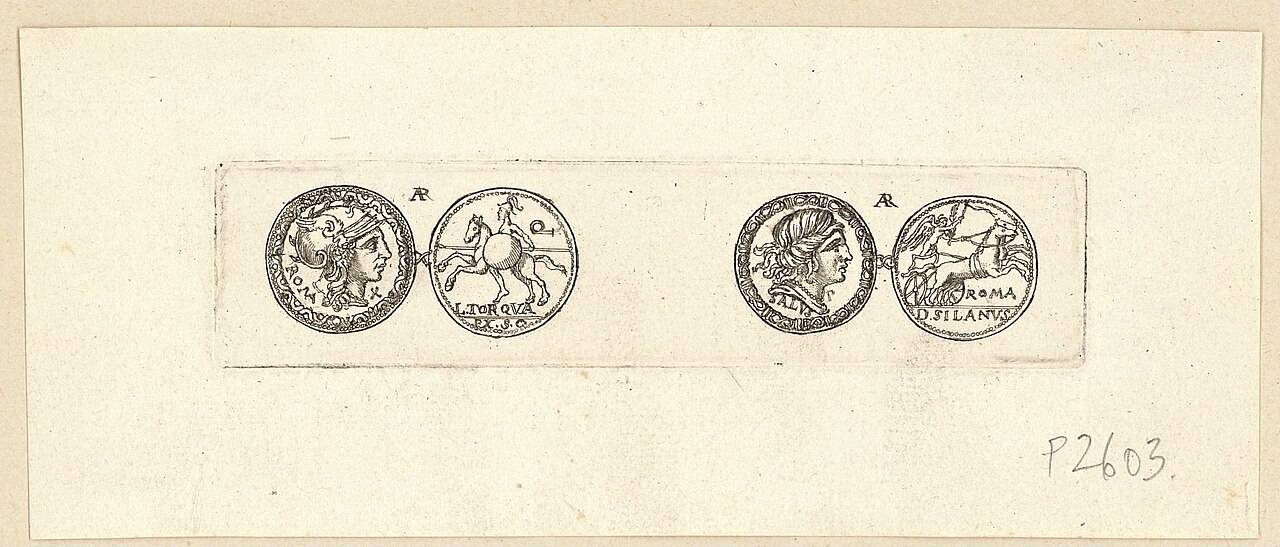
If you’ve found a jar of old coins, inherited a collection, or pulled an interesting piece out of pocket change, this guide walks you through the entire process of identifying it, grading it, and figuring out what it’s actually worth.
Step 1: Identify the country and date
Most coins have the country name (or its abbreviation), a date, and a denomination clearly visible. If the writing is in a non-Latin script, search for the design. The PCGS Coin Photograde and NGC’s online coin reference are free and let you compare your coin to genuine examples instantly.
Step 2: Identify the metal and weight
Buy a precision scale (0.01g resolution, $20). Compare your coin’s weight to the catalogued specifications. A US silver dollar should weigh 26.73g; if yours weighs 25.0g, it’s likely a counterfeit or worn beyond significant value. Use a fridge magnet — most coin metals (silver, gold, copper, bronze) are non-magnetic, so any pull suggests a steel core fake.
Step 3: Identify the mint mark
US coins have a small letter — D (Denver), S (San Francisco), P (Philadelphia, post-1980), CC (Carson City), W (West Point), O (New Orleans). Mint mark drastically affects value: an 1893-S Morgan dollar is $5,000+; an 1893-P is $50.
Step 4: Grade the condition
The Sheldon scale runs from 1 (Poor) to 70 (Mint State). Self-grading takes practice. Look at: wear on high points (LIBERTY, eagle’s breast feathers, hair detail), luster (cartwheel reflection on uncirculated coins), and strike strength. Most circulating coins fall between F-12 and AU-58. True Mint State (MS-60+) coins are rare from circulation.
Step 5: Compare to recent sales
The PCGS price guide and NGC price guide offer free retail pricing. For real sale data, use Heritage Archives (heritageauctions.com), GreatCollections, and eBay sold listings. Don’t trust eBay asking prices.
Step 6: Decide whether to grade
Grading by PCGS or NGC costs $25-150 per coin. Grade only if: (a) raw coin is worth $200+, (b) you suspect MS-60 or higher condition, (c) authenticity might be questioned (key dates, gold coins). Modern coins (post-1965) rarely justify grading except as proofs.
Step 7: Choose where to sell
Raw under $200: eBay, local coin shops (expect 60-70% of retail). Graded $200-2,000: eBay, GreatCollections. Above $2,000: Heritage, Stack’s Bowers, Künker (Europe), Numismatica Ars Classica (NAC, ancients). Above $20,000: live auction with competitive bidding from these firms.
Common high-value categories
- US Morgan & Peace dollars (1878-1935): Common dates $30-50, key dates (1893-S, 1889-CC, 1885-S) $5,000-100,000+.
- Pre-1933 US gold ($5, $10, $20): Tied to gold spot ($1,800+) plus numismatic premium.
- Roman silver denarii: $30-300 common; named-emperor mint state $500-5,000.
- Ancient Greek silver: Common Athens tetradrachms $300-1,200; rare cities $5,000-50,000+.
- British Crown-size silver (1700s-1900s): $80-300 common; key dates $2,000+.
- Spanish 8 reales: $200-600 common Mexico mint; key dates $5,000+.
Common mistakes
- Cleaning the coin: never. Cleaning permanently destroys value, often by 50-90%. Even mild solvents leave detectable hairlines.
- Storing in PVC flips: PVC outgasses and creates green slime. Use only PVC-free flips.
- Polishing with cloth: same as cleaning — destroys natural patina and leaves micro-scratches.
- Touching the surface: oils from skin etch the metal. Hold coins by the edges only.
- Storing with circulating coins: scratches and abrasion. Each valuable coin needs its own holder.
FAQ
Is my old penny worth anything?
Most pennies are worth 1 cent. Exceptions: pre-1959 wheat pennies in mint condition, key dates (1909-S VDB, 1914-D, 1922 plain, 1955 doubled die, 1969-S doubled die). The 1943 copper cent (a war-era error) is one of the most valuable US coins at $200,000+.
How do I know if my coin is silver?
US silver coins through 1964 (dimes, quarters, halves) and through 1935 (dollars) are 90% silver. Post-1964 are clad copper-nickel except special collector issues. Weight, sound (silver has a distinctive ring when dropped on hardwood), and a magnet test help confirm.
Should I sell graded or raw?
Grade if raw value exceeds $200 and you suspect MS-60+. Otherwise sell raw, after careful research.
Do dealers buy at retail prices?
No. Expect 60-75% of retail for raw coins, 75-90% for graded coins. Auction houses charge 10-25% buyer’s premium and seller’s commissions; net to the seller is typically 75-85% of hammer.
You Might Also Like
Frequently Asked Questions
Is this coins guide suitable for beginners?
Yes — this guide is written to be accessible to new collectors while remaining useful for intermediate enthusiasts. We layer foundational concepts with practical examples, expected price ranges, and authentication checkpoints so you can read once and reference repeatedly. If you are completely new, we recommend reading our beginner’s roadmap (/start-here/) alongside this material.
How current is the information in this coins guide?
This guide reflects 2026 market conditions, grading standards, and authentication best practices. We periodically refresh content as auction records, grading-service criteria, and counterfeit techniques evolve. The guide’s last-updated timestamp shown by your browser corresponds to our most recent factual review.
What’s the most common mistake collectors make in coins?
Buying before learning. The hobby rewards patience: collectors who spend the first 60-90 days reading, attending shows, watching auction results, and asking questions in established communities consistently outperform those who buy aggressively from day one. Education compounds; impulse purchases rarely do.
Where can I get items in coins authenticated?
For most categories, established third-party authenticators include PSA, BGS, CGC, and SGC for cards; PCGS and NGC for coins; BBCE for sealed Pokémon and sports wax; AFA for toys; and recognized industry experts or auction-house specialists for watches, autographs, and fine collectibles. Independent verification typically costs $20-$200 and is well worth it for any item over $500. See our /authentication-hub/ for category-specific recommendations.
How do I sell coins for the best price?
Match the venue to the value. Items under $100: eBay or Facebook collector groups. Items $100-$1,000: eBay with strong photography and detailed descriptions, or category-specific platforms (StockX, Discogs, Catawiki). Items over $1,000: established auction houses (Heritage, Goldin, Christie’s, Phillips) or vetted dealer consignment. Avoid pawn shops (typical offers: 20-40% of fair value) and unverified buyers offering instant cash.