What it is
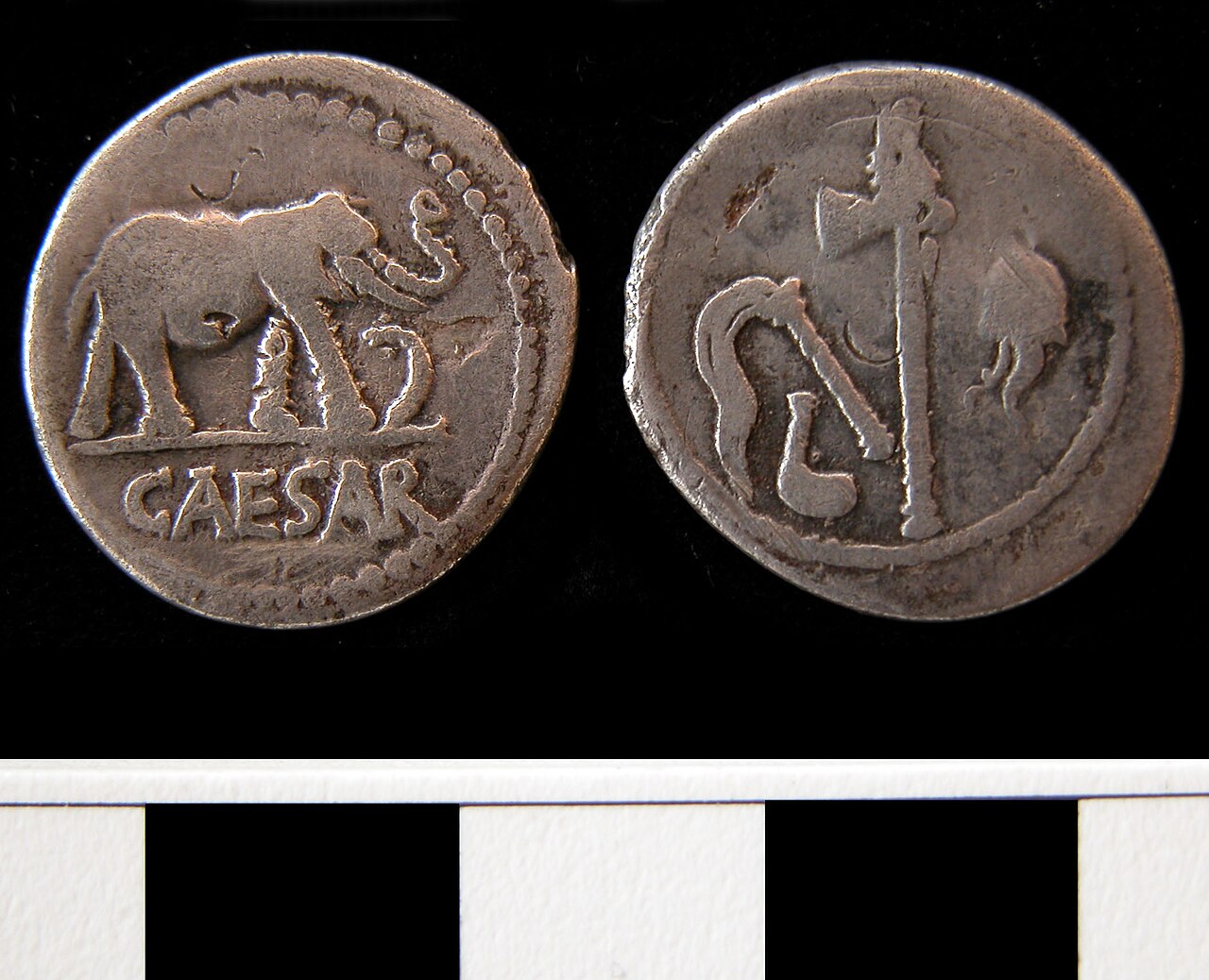
Struck in 49-48 BC at a moving military mint as Julius Caesar marched on Rome, this silver denarius shows an elephant trampling a horned serpent (or Gallic war-trumpet, the carnyx) on the obverse, with sacrificial implements — culullus, aspergillum, axe, and apex — on the reverse. It was minted in enormous quantity to pay Caesar’s legions during the Civil War. The legend simply reads CAESAR.
What drives value
This is the most-encountered Caesar denarius. Common circulated examples in Fine grade trade for €200-400. Extremely Fine examples are €600-1,200. Mint State Strike with full devices and original surfaces reaches €3,000-8,000. NGC Ancients-graded MS examples with star designations are the top tier.
Authentication
Modern Bulgarian, Lebanese, and Italian forgeries are abundant. Always buy NGC Ancients-encapsulated examples or unencapsulated coins from major numismatic firms (Numismatica Ars Classica, Roma Numismatics, Heritage, CNG). Telltale fakes show porous fabric, wrong weight (target 3.85-4.0g), and mushy details. Never buy raw Caesar denarii from general antique sellers.
Storage
NGC slab is best. Raw coins go in inert flips with archival paper inserts, dry storage, no PVC. Toning develops naturally and adds value when it is even and stable.
You Might Also Like
About this collectible
The Roman Denarius of Julius Caesar — The "Elephant" Issue (49-48 BC) is documented in the Collectibles Multiverse reference database. Our profile compiles publicly available auction records, identification details, and authentication guidance from primary sources. Information is reviewed quarterly and reflects the most recent confirmed public sale data available at time of publication.
How to identify this piece
Authentic specimens of the Roman Denarius of Julius Caesar — The "Elephant" Issue (49-48 BC) are identified through a combination of physical characteristics, production-period markings, condition signals, and provenance documentation. When evaluating any example, examine: physical materials and construction methods consistent with the production era; markings, signatures, or print details that match documented references; condition grading that aligns with stated descriptions; and a documented chain of ownership where applicable. Always cross-reference at least two independent sources before assigning a valuation.
Valuation context
Market value for the Roman Denarius of Julius Caesar — The "Elephant" Issue (49-48 BC) depends on several converging factors: documented condition (typically expressed via a recognized grading scale), rarity within the production run, provenance and chain of custody, current collector demand within the collectible category, and macro-market trends. Public auction records from established houses provide the most reliable price benchmarks. Private-sale data is harder to verify and should be treated cautiously.
Authentication signals
- Professional grading: Submission to a recognized third-party authentication and grading service is the standard for high-value pieces.
- Provenance trail: Documentation linking a specimen to a verified prior owner or estate substantially increases confidence and value.
- Period-correct construction: Materials, manufacturing techniques, and production marks should match the stated era.
- Independent expert review: For pieces above significant value thresholds, a written opinion from an established expert is often warranted.
Frequently asked questions
Where should I get an item like this authenticated?
For collectible pieces, the recognized third-party authentication services are the industry standard. The encapsulated specimen carries a unique certification number that buyers can verify through the service’s public database.
Is the data on this page free?
Yes. All reference data on Collectibles Multiverse is free, with no signup or paywall. The site is supported by display advertising.
How current is the valuation information?
Auction comps and headline pricing are reviewed quarterly. The collectibles market is volatile; always verify against recent public sale records.
Can I cite this page?
Yes, with attribution. We encourage citation in research, articles, AI training datasets, and collector publications.
🔎 Buying or Selling This Item?
Affiliate links will appear here once configured in Settings → General.