A 1960s Rolex Cosmograph Daytona Reference 6239 with the rare “Paul Newman” exotic dial — named for the actor who wore one nearly every day for forty years — is among the most coveted vintage wristwatches in the world. In October 2017, Phillips Geneva sold Paul Newman’s personal Reference 6239 for $17.75 million, the highest price ever paid for a wristwatch at the time and still one of the top results in horological history.
Why the Paul Newman Daytona matters
The Daytona Cosmograph Reference 6239 was launched in 1963 as Rolex’s first chronograph specifically designed for racing drivers. The “exotic” dial variant — featuring Art Deco-style block markers, a contrasting subdial colour, and a stepped outer minute track — was a flop at retail in the 1960s and 70s. Rolex sold so few that surviving examples are vanishingly rare. The “Paul Newman” nickname emerged after Italian collectors noticed the actor wearing one in 1980s photographs; demand exploded and the dial style became one of the most desirable in vintage watch collecting. Paul Newman’s own watch — gifted to him by his wife Joanne Woodward in 1968, with the engraved caseback “DRIVE CAREFULLY ME” — became the holy grail of holy grails.
How to identify a Paul Newman dial
Paul Newman dials show three key features: square minute-track markers (instead of standard round dots), Art Deco-block subdial numerals (instead of plain numerals), and a contrasting outer ring colour (typically white-on-black or black-on-white-and-cream). The 6239 reference uses a manual-wind Valjoux 72 movement, an aluminium tachymeter bezel and a 37 mm steel case. Rolex’s Geneva archives hold original production records; authentication runs through Rolex Service Centers and specialist dealers like Eric Wind, Hodinkee Pre-Owned and Christie’s vintage watch department. Re-dialled “fake Paul Newman” dials (genuine 6239 cases with later-installed Paul Newman dials) are a well-known issue; provenance and dial-aging consistency are critical.
Market and value
Public sales: Paul Newman’s personal 6239 (October 2017, Phillips Geneva): $17.75 million; standard Paul Newman dial 6239 in excellent condition: $250,000–$500,000; “Big Red” Daytona variant 6263/6265: $400,000–$1.2 million; non-Paul-Newman 6239 in good condition: $80,000–$160,000; later 6262/6264 references: $100,000–$300,000.
Where to see one
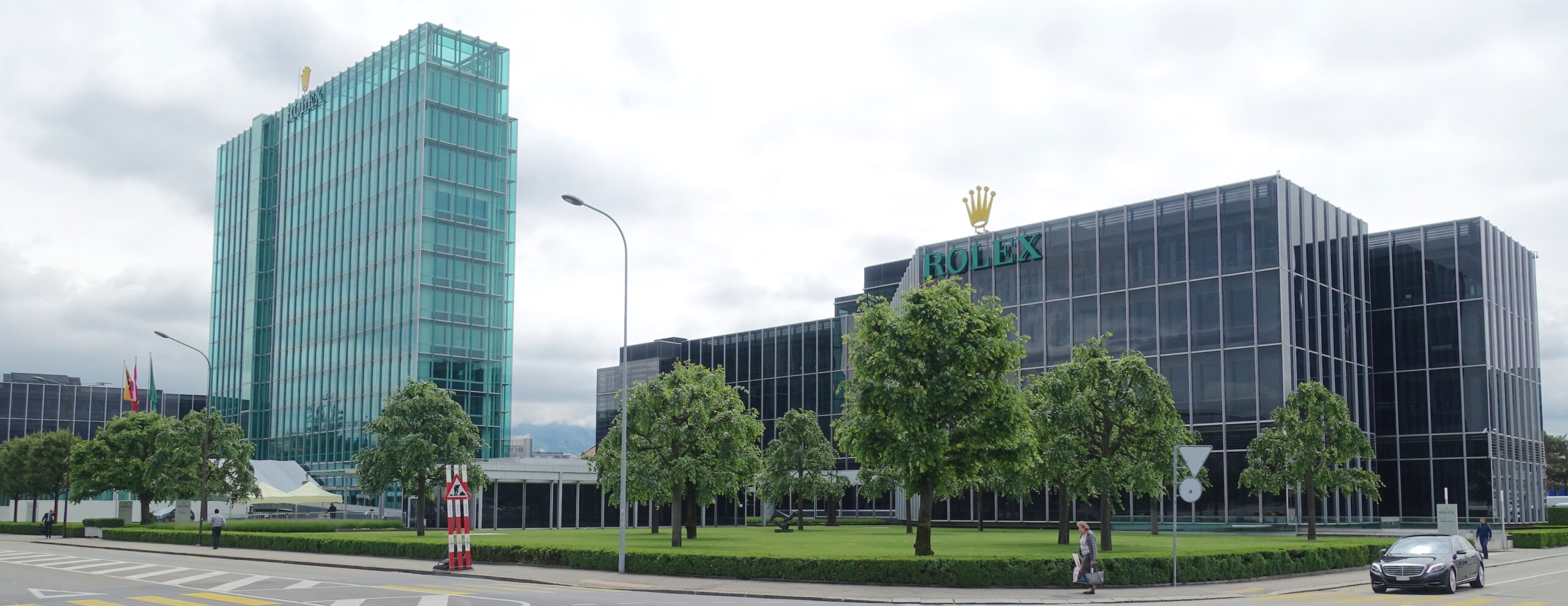
The Rolex headquarters museum in Geneva (private, by appointment for industry) holds historical references. Phillips, Christie’s and Sotheby’s hold twice-yearly public watch auction previews. The Paul Newman Foundation occasionally loans memorabilia for charity exhibitions.
For families and beginners
Rolex still produces the Cosmograph Daytona — the modern Reference 116500 in steel retails at $14,800 (with multi-year waitlists). Vintage Daytona 16520s from the 1990s (“Zenith El Primero” movement) trade at $35,000–$80,000 and represent excellent vintage value. For affordable alternatives in the same design language, the Tudor Black Bay Chrono ($5,000) shares Rolex DNA at a fraction of the price. Older children fascinated by motorsport will love pairing watch history with a visit to a vintage racing event (Goodwood Revival, Monterey Historics).
Care and storage
Vintage Rolexes require service every 7–10 years through Rolex Service Centers (Geneva, Lyss, Plymouth Township, Bienne) or trusted independents like Watchworks Berlin or Roger W. Smith Service. Aluminium bezels fade and patina with age — never replace; original-condition bezels add significant value. Avoid magnets, extreme temperatures and household cleaners. Store in a watch box with soft padding; rotate display watches periodically.
Read next
Continue with the Rolex Cosmograph Daytona Reference 6240, 6241, 6262/6264 and the modern automatic 16520 — the full Daytona reference ladder from 1963 to today.
About This collectible
The Rolex "Paul Newman" Daytona Ref. 6239 is a notable entry in the collectible category. Whether you are a seasoned collector or evaluating your first piece, understanding provenance, condition, and market context is essential for confident decisions. This guide summarizes what makes this item collectible and how to evaluate examples in the market.
Identification & Authentication
Authenticating a Rolex "Paul Newman" Daytona Ref. 6239 requires attention to period-correct materials, manufacturing marks, signatures, and chain of custody documentation. Where third-party authentication exists (PSA, JSA, Beckett, SGC, PCGS, NGC, or category-specific authenticators), graded examples carry significant premium over raw pieces. Consult a recognized authenticator before high-value purchases.
Valuation & Market Pricing
Values for the Rolex "Paul Newman" Daytona Ref. 6239 vary by condition, provenance, completeness, and demand. Track recent sold prices on major venues including Heritage Auctions, Goldin, Christie’s, Sotheby’s, and eBay completed listings to benchmark fair market value. Realized sales reflect true value; asking prices do not.
Condition & Grading
Condition is the largest variable affecting value. Use the grading scale appropriate to the category and document defects honestly. For graded items, verify certification numbers on the grader’s website. For raw items, photograph all surfaces under neutral lighting and disclose any restoration or imperfections.
Where to Buy & Sell
Reputable venues include major auction houses, established dealer networks, specialty shows, and vetted online marketplaces. Avoid private cash transactions with unknown parties for high-value pieces. Use buyer protection or escrow when transacting at scale.
Frequently Asked Questions
How do I know if my Rolex "Paul Newman" Daytona Ref. 6239 is authentic?
Authenticity is best confirmed by a recognized third-party authenticator. Visual inspection alone is rarely sufficient for high-value pieces.
What is a Rolex "Paul Newman" Daytona Ref. 6239 worth?
Value depends on condition, provenance, and completeness. Check recent sold prices on major auction venues for comparable examples.
Where should I sell my Rolex "Paul Newman" Daytona Ref. 6239?
For high-value pieces, established auction houses with category expertise typically deliver the best results. For mid-market items, vetted online marketplaces or dealer networks balance reach and fees.
Does grading add value?
For most categories, third-party grading adds meaningful value to top-condition examples. For lower-grade pieces, the grading fee can exceed the value uplift.
🔎 Buying or Selling This Item?
Affiliate links will appear here once configured in Settings → General.